Where to Purchase Native Plants
This time: Where to purchase Native Plants; How to support ground-nesting native bees.
It is possible for you to create a habitat relatively quickly in your garden that supports dozens of beneficial insects and active birds. This habitat will surround you with varied colorful butterflies creating a calming space.
To get there, you use the short list of keystone native plants that you created here to use to purchase locally or order online. Let's refer to your short list of plants as your “Hot List”.
Sources of Native Plants
🏬 Convenient Retailer
Sometimes retailers like big box home stores (with gardening areas) and local nurseries have available native plants. In fact, this is becoming more common. Once you have your list [link], check live plants and seed areas in these stores to see if you get lucky. (By that I mean find the plants you are looking for.) I got lucky finding Coreopsis and Rudbeckia (Black-eyed Susans).
Caveat: These stores may sell you plants that were grown with pesticides that could kill or sicken the very creatures you want to support. Do some research, look for warning labels, and ask questions.
🌻Botanical Garden Sales
Botanical gardens, arboretum, or specialized nursery sales are also a source of natives, usually sold as live plants in pots. It is common that they have sales once or twice a year as fundraisers. Take advantage of these.
Near me, for example, are a university botanical garden which has two sales a year and a non-profit private garden that has a big sale once a year.
🌱 Standard Seed Catalogues
You should be familiar with the major players in the plant and seed catalogue services. They specialize in popular garden plants and new varieties that will “wow” gardeners and tempt them to buy. They increasingly have native plants available and mark them because of their growing popularity. Sometimes, they even have “mixes” of seeds for use in larger areas.
Caveat: Mixes of seeds are compelling but may not contain your Hot List plants. In addition, they may have non-native plants which in general could go against your plan to build a viable habitat with the best plants. There is an online location for better seed mixes in the Resources section below.
🌟 Specialized Seed and Plant Catalogues
There are seed companies that specialize in native plants! And many send these to you with detailed information on how to succeed in growing them. You may not have ever heard of these organizations, but if you are building a garden habitat, you definitely need to know them.
They are my main source of seeds for the critical Keystone Plants. Search for those online serving your area. It is also good to check in with people locally in garden clubs, master gardeners and others with experience using the services.
🏡 Local Garden Societies
Some areas have a gardening group that has flower sales, sometimes they have native plants.
Knowing all the above now, you can find the best source for the live plants and seeds from your Hot List. To make things easier, there is a link below (in the Resources) section to a database of native plant, seeds and services.
Can't find a source for your desired plant? If you cannot find a source for one of the plants on your Hot List after checking everywhere you know, don’t panic. Go back to the general list of Keystone Plants you used before and choose the next one down on the list. Then see if you can find that one to purchase.
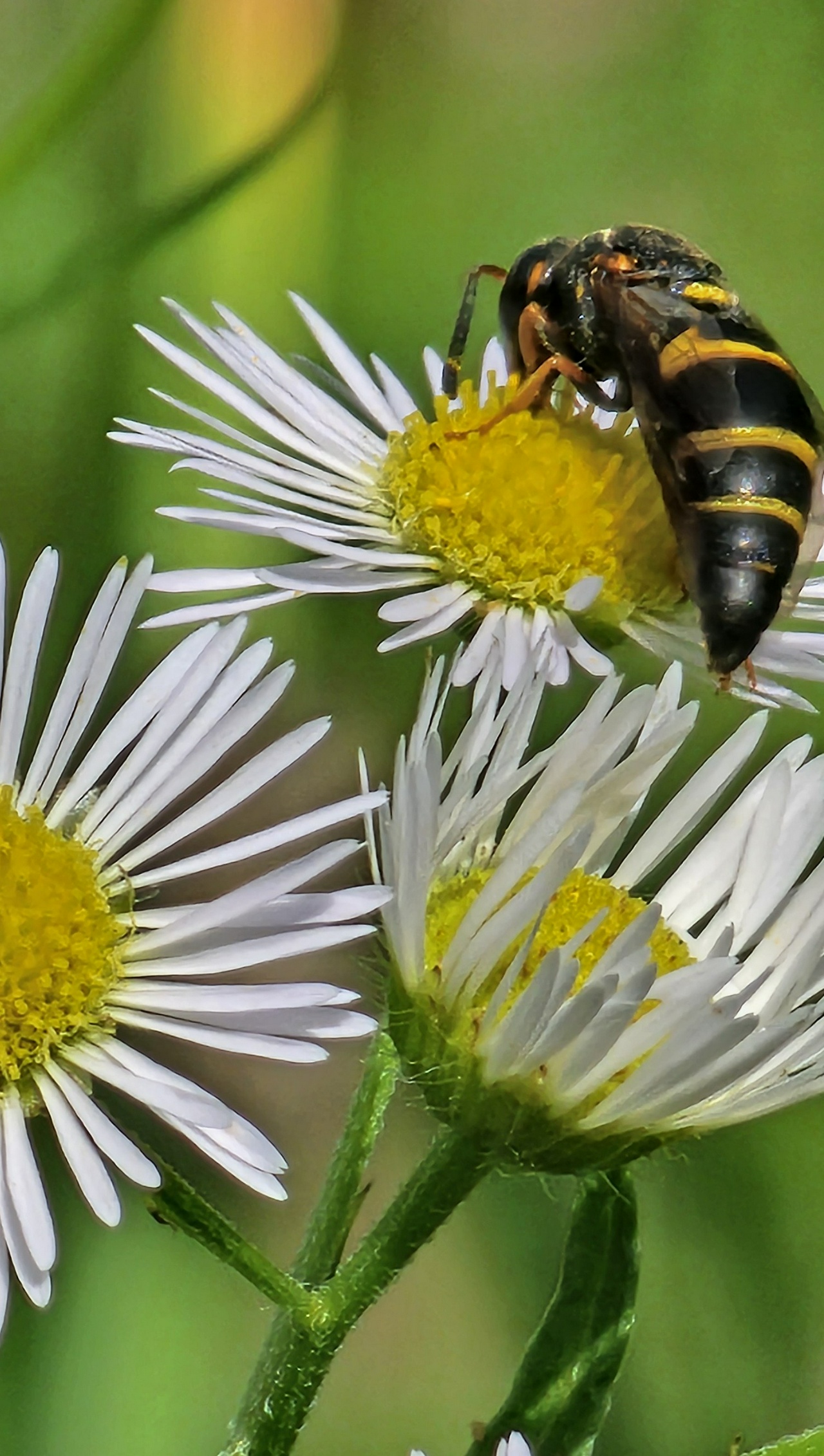
A scene from my habitat garden: A native bee with a few thin yellow horizontal stripes and other yellow markings on a long black body (which is not fuzzy) looks for pollen on a flower with a yellow center mound surrounded by dozens of slender white petals. The flowers are Daisy Fleabane, a native in the U.S. typically treated as a weed by lawn lords. The bee may be a Yellow-faced Bee.
Seasonal Continuous Improvement: Winter/Offseason
One of the two main categories of native bees live in places that are very rare in the urban or suburban environment. These are called “ground-nesting bees”. These bees are solitary and do not bother people – and you can help build their populations.
See if you have space to support ground-dwelling native bees. First, you need some ground! If you have that, you can move to the next step, making sure it's available to bees with the few resources they'll need.
Here are some preferences for bees to move in:
- Your ground should be free of debris that will prevent bees from accessing the soil. Barriers to soil entry are wood mulch, thick layer of rocks/stones, dense vegetation mat and so on. Bare ground, clumping plants, and leaf mulch are better.
- The ground should not be disturbed by digging, walking, hoeing, tilling, or cultivating. It should be well-drained. This is the easiest maintenance you will ever have in your habitat!
- You will need to add sand and pebbles if they are not already available in that area.
Resources
🌺Native Plant, Seed and Services Directory
If you choose to search for native perennial seeds online and don't know where to start, access this database and filter to find a provider that has natives for your eco zone.
This is an example of a plant and seed catalogue that specializes in native plants. They have mixes that have been developed in collaboration with the Xerces Society for Invertebrate Conservation.
🦋Pollinator Conservation Seed Mixes
If you have a large space, try a pre-mixed pack of various natives designed for your ecozone. Not all areas are represented but you might find a quick solution to your needs.
🐝Clear Space for Bees: Why Pollinators in Your Yard Need Access to Bare Ground
Building ground-dwelling bee habitat is new for most of us, but it is not hard once you understand the important basics. This guide from the Xerces Society will explain what you need to know.
[12 Jan 2026]
#HabitatGardening #BiodiversityGardening #Gardening #NativePlants #Nature #Environment #Conservation #Biodiversity #Invertebrates #Pollinators #BirdConservation
I’m Joe Wynne, a gardener since 1965 when I started as a helper for my grandmother. We maintained irises then and I still have those plants today. I’m a former Tennessee State Park Naturalist, who now focuses on making my garden a habitat for native plants and native bees, birds and butterflies. It’s working! I share what I learn.
Follow me on Mastodon. See articles from others in my magazine on Flipboard: Habitat Gardening
© Joe Wynne 2025-2026