Planting Time!
This time: Plant your seedlings; Improve preparations for extreme climate conditions
Your seedlings are ready; the soil is prepared and now comes the rewarding part: planting. Whether you’ve grown native plants from seed, picked up healthy starts from a nursery, or are ready with direct-sow seeds, this is the big moment!
Take a moment to make sure you get everything right.
🌿 Consider spacing. Before you begin, take a little time to review the spacing guidance for each species you’re planting. Different natives have different preferences for spacing. Following those recommendations will give your plants the best chance to establish quickly and reduce problems later.
If you're planting multiple species in the same bed, and they all have different spacing requirements, it can get a bit complicated. I have a small metal tape measure that I have used for these situations. The good news is that you really just have to do this once per bed. You are planting perennials after all.
🌻 Follow your garden design for placement. Ideally, you’ve already roughed out a basic design while planning your plant purchases (previously covered here). That doesn’t mean every plant has to go in an exact spot, but having a general layout makes planting days smoother. Just like traditional gardening, native plant gardens can be formal, informal, or somewhere in between.
Set out your seedlings, starts, and seeds so that you can assess where each will go. Some seeds that you started before planting season may not have germinated. (It happens!) Check to see how this effects where you place what items.
I live in Suburbia, so I have this length of space on the far side of the driveway that is perfect for a mini-prairie design. It also holds any extra plants or seeds I end up not finding a place for.
🌱 Consider the seeds. Don't forget your direct-sow seeds! They may have been forgotten in all the effort to grow seedlings in the off-season. For designed beds, leave a space for seeds where their height will fit. Again, follow directions for spacing and consider nearby plants.
🚿 Follow traditional gardening best practices in early days. Once planted, keep the soil consistently moist for the first few weeks. That steady moisture helps young roots expand into the surrounding soil and settle in. This is no different than traditional gardening.
There are many more tips in the Resources section below.
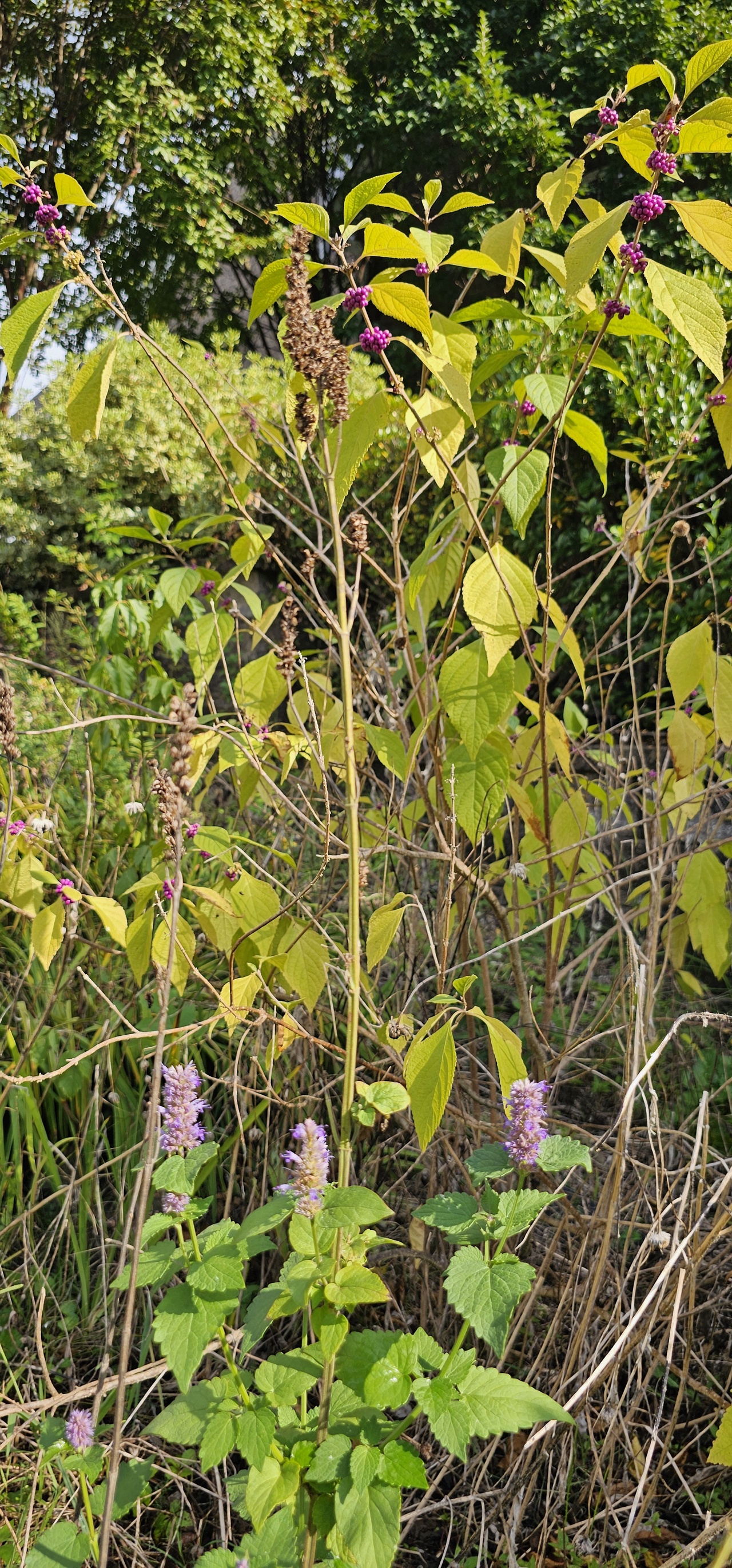
Here is a portion of my yellow/purple native plant bed, showing a shrub in the background, American Beautyberry, which has bright purple berries along its branches. In the foreground, Anise Hyssop, coordinates with purple spikes of flowers. Both of these had survived two periods of four weeks in summer heat with no rain. This is becoming more common here. The shrub suffered – you can see leaves are sparse – but survive it did. I did not water so that I could see how resilient these native plants can be. (That’s why I’m not embarrassed to show this pic.) The non-natives in my garden needed water constantly.
Seasonal Continuous Improvement: Late Spring / Early Summer
Think about last year. How did your native plants garden handle dry spells? Or extreme heat? Or higher than expected rainfall? Or whatever significant problems you experience in your area at some point in the growing season? Think about improvements that will help your plants thrive. Some examples:
- Improve physical water retention methods. I started shaping certain beds in curves to hold water from hard rains where too much would run off.
- Extend garden beds away from growing shrubs and trees. It’s very common to place plants too close to shrubs. After a couple of years, everyone is fighting over space, water, and nutrients.
- Too much water always collecting in an area, drowning your natives? Change out plants to favor those that like it wet and make a rain garden!
- Manage mini-prairie flowers seeding into your adjacent lawn by expanding the bed! The lawn is less important! Of course, if this is going to get you in trouble with neighbors or the HOA, be careful.
Start planning in early summer to complete urgent improvements. This gives you time to perfect designs, gather materials, and be ready for the best time to complete them.
Here are a couple of tips that are generally useful.
Compost builds the soil into root-thriving paradise. Habitat gardening, where you leave the soil layers intact, benefits from the use of compost even more than traditional gardening. A layer of compost ensures the soil is alive with beneficial insects, bacteria, and fungi, all working together to provide your native plant roots with what they need.
Some native plants that you grow may prefer soil that is found normally in your area and not the deeply “fluffy” soil that is often the goal of traditional gardening. You don’t need a large layer of compost for these plants, just enough to simulate organic matter that naturally accumulates on the soil surface.
Becoming a native plant gardener lets you see the importance of starting your own compost operation. You can check the many resources for composting if you are new to it. I have a simple small bucket collector in my kitchen and a simple cube bin in my back yard that produces the vast majority of what I need all year. I have added some links to get you started below in the Resources section.
Mulching for natives is not the same as traditional gardening. A good layer of mulch helps retain precious soil moisture, suppresses weeds that compete for nutrients, and moderates soil temperatures as days grow hotter. This is all good.
But in native gardens, we need to think about ground-dwelling bees who cannot reach the soil under traditional mulch. We need to think about how modern mulches with long-lasting color have dyes that cause the mulch to form a dense, hard layer that beneficial insects cannot penetrate.
Instead, create your own mulch from leaves, even small natural debris available locally. You can even include the compost you are making.
More about composting in the Resources section below.
Resources
How Far Apart Should I Plant Native Plants?
An excellent spacing reference for beginners. It walks through how mature plant size, growth habit, and planting density influence plant health, weed pressure, and long‑term maintenance, helping gardeners avoid overcrowding or overly sparse beds.
Guide for Beginning Native Plant Gardeners
A thorough introduction to native gardening fundamentals from Grow Native!. This guide explains how native plants grow and spread over time, why proper spacing matters, and how different design styles – from formal borders to naturalistic plantings – affect layout decisions.
Caring for Your Native Seedlings
From the Wild Seed Project, a practical, easy‑to‑read guide covering the critical early stages of seedling care. Topics include watering, crowding, repotting, and understanding the slower first‑year growth common to many native perennials.
Compost and the Native Plant Garden
This guide from The Wild Ones explores how compost fits into native plant gardening, including when it helps and when nature does the work on its own.
The Beginner’s Guide to Composting
A simple, no‑jargon overview that emphasizes composting as a natural, low‑stress process from Compost Magazine.
Compost 101: How to Start Composting for Beginners
From Epic Gardening,_ a clear, science‑based introduction that explains what compost is, why piles fail, and how compost improves garden soil.
#HabitatGardening #BiodiversityGardening #Gardening #NativePlants #Nature #Environment #Conservation #Biodiversity #Invertebrates #SolarPunk #WildflowerWednesday
I’m Joe Wynne, a gardener since 1965 when I started as a helper for my grandmother. We maintained irises then and I still have those plants today. I’m a former Tennessee State Park Naturalist, who now focuses on making my garden a habitat for native plants and native bees, birds and butterflies. It’s working! I share what I learn.
Follow me on Mastodon. See articles from others in my magazine on Flipboard: Habitat Gardening
© Joe Wynne 2025-2026