Support Bird Nesting
This time: Make nesting easier for your birds; Improve your home habitat for birds.
If you are a garden hero, creating habitat to support populations of native birds, you not only get to enjoy the good feeling that comes from supporting nature, but you get to enjoy more bird song in spring.
Remember that many people and businesses clear out leaves and debris in the fall. This robs birds of nesting material! You can help fill the gap by making available prime resources and even help birds with nests away from your location. More nests mean more chicks.
To fill the gap, put out a variety of materials that most birds can use to build nests.
Break up twigs. Bird populations will need plenty of small twigs to make their nests. Make them available! Break up longer twigs until they are shorter than about 6 inches/15 cm. Create two or three small piles in different locations convenient to birds.
Set out long slender plant leaves. Some birds use old leaves for nests, especially if they are the slender kind. I have long leaves of irises and daylilies that I keep over the winter and then cut into smaller sections. I’ve seen these in nests in trees in my yard.
Make short strands of string and yarn available. While you're at it, cut sections of natural fibers to less than 6 inches for additional building materials. If you have fabric laying around, that can be cut into small pieces and be useful as well.
Leave moss where it grows. Some birds use moss to fashion their nests.
Leave spider webs alone. Your first reaction might be to knock down any spider web you see. Especially during the nest-building season, leave as many spider webs up as you can. Hummingbirds can use spider webs to pad their nests.
Make mud available. There are birds that use mud to add strength to their nests. If you don't know of a source of mud nearby, clear off an appropriate spot if you have one.
Don’t delay too long. When birds are ready to nest, they need the materials right then. I once left my garage door open most of the day in the spring while I was gardening. By the time I returned, a couple of Carolina Wrens had a nest 2/3 complete in the garage using a pile of twigs I had placed nearby.
Find more ideas in the Resources section below.
By the way, keep helping birds thrive through late winter. It is important to maintain their food. Birds need extra energy to survive the last of cold weather and the new activity of building nests. If feeding stops, they might find it difficult to survive.
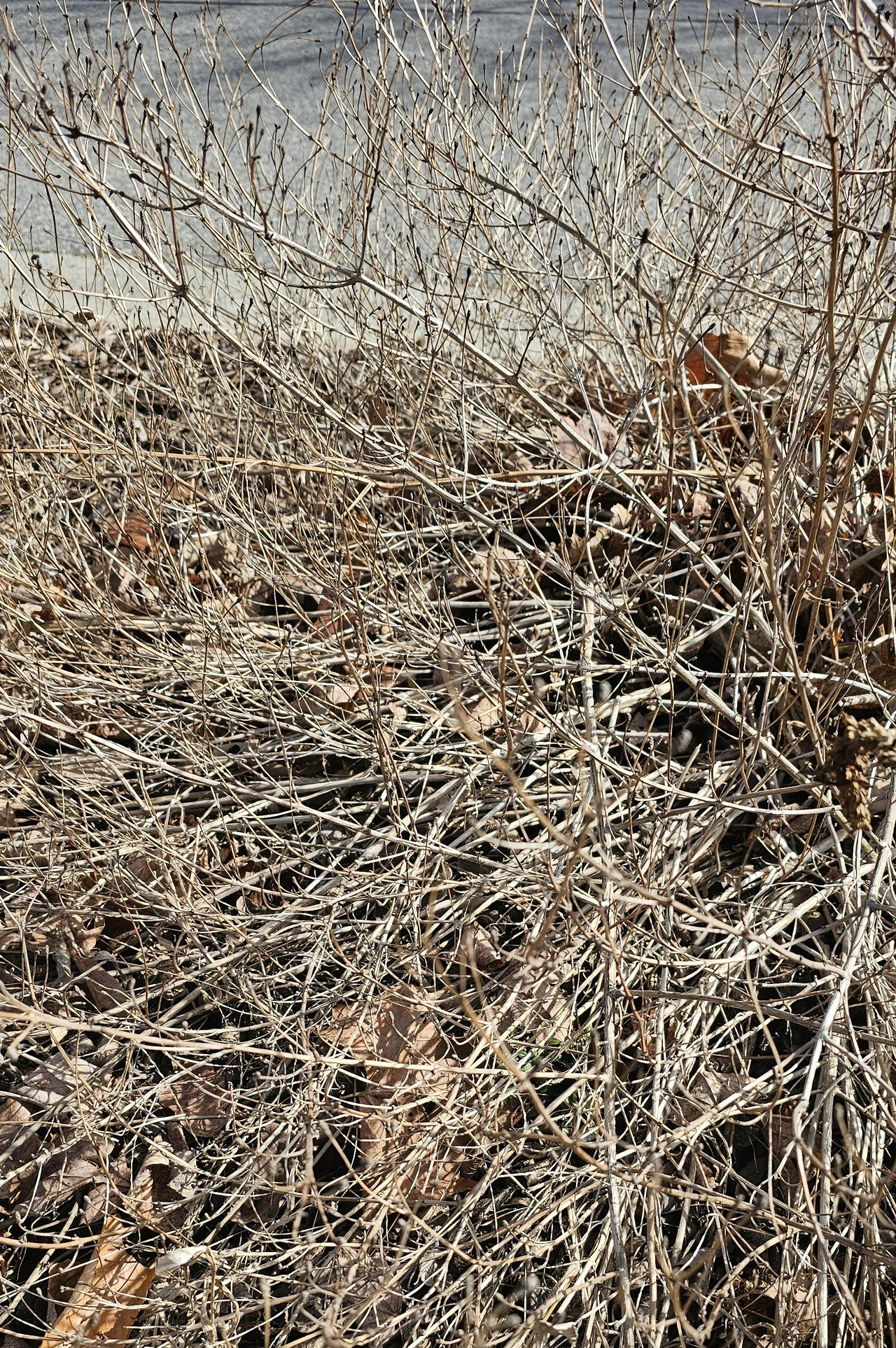
The lantana here has died back for the winter with only its slender branches remaining. My neighbors would typically cut back something like this and clear all the debris away. I cut all the twigs and broke them up into smaller nest-building size sections. It only took a few minutes. Notice that I left the leaves on the ground to house bugs for the birds to eat.
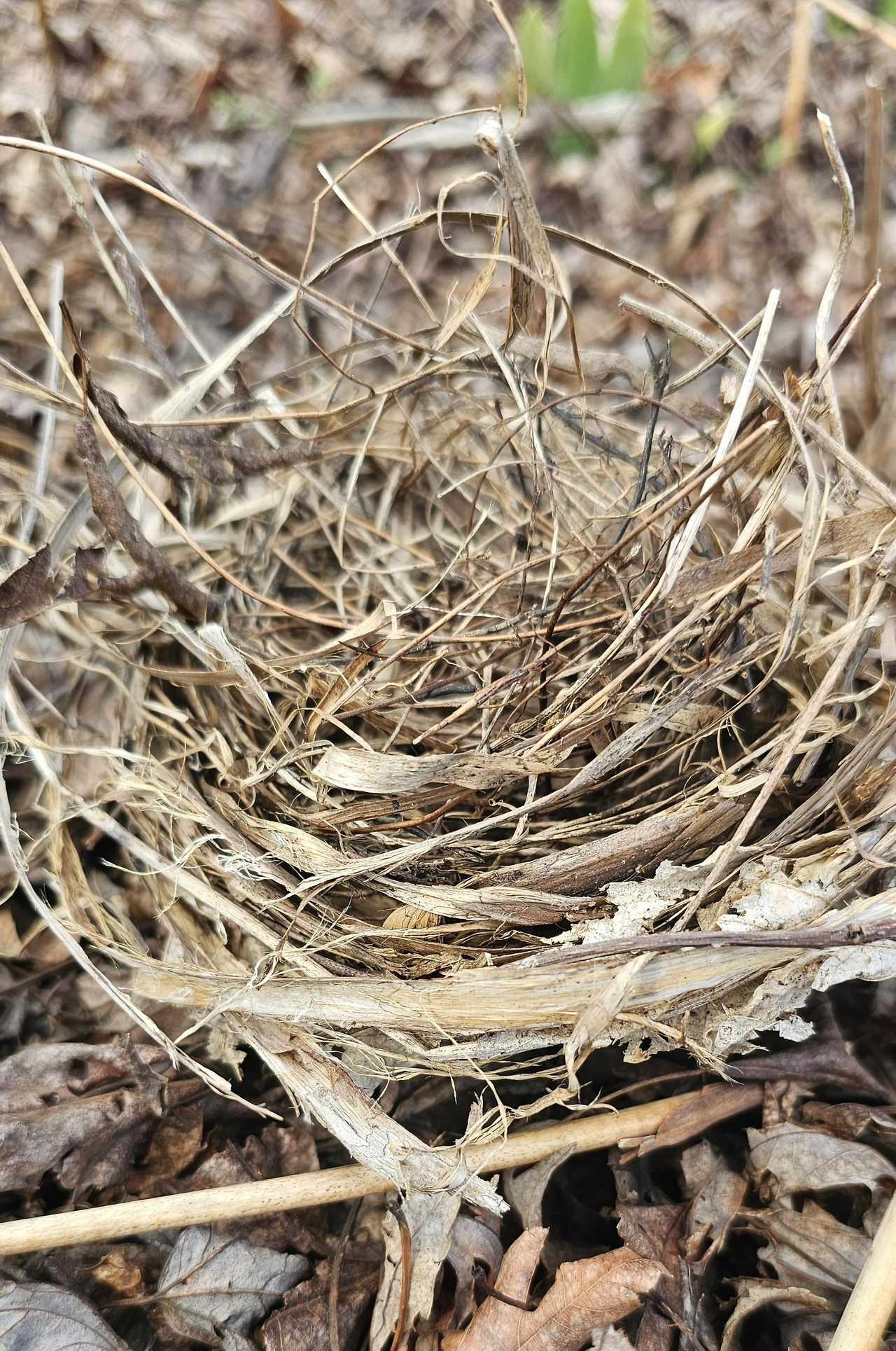
This top part of a nest that fell to the ground in my yard shows the variety of types of materials used. Visible are twigs, pine needles, dead slender leaves (daylilies from my yard), small tree leaves. These are exactly the kinds of debris people remove for the sake of “fall clean up” or “garden tidying”. What’s a bird to do without your help?
Seasonal Continuous Improvement: Winter/Offseason
As you continue designing your habitat garden, consider ways you can make additional improvements for birds.
What do your local birds use to build nests? During the winter, you can examine last year's nests to see what your local birds prefer for nesting materials.
Are you using pesticides where birds feed? Most birds feed primarily on bugs. If you kill bugs, then the birds don't have enough food. When birds spend a summer eating bugs with poisons in their bodies, it sickens or kills them. If possible, plan to dispose of these chemicals and replace them with more sustainable practices.
Do you have good location for a brush pile? Put larger branches on bottom and smaller at the top. Birds will feed and nest here.
Find more ideas in the Resources section below.
Resources
🐦 Create a Bird-Friendly Habitat
- This guide includes eleven ways to create a bird habitat.
🐦 How to Provide Nesting Materials for Birds
- Tips include good ways to contain materials, like yarn and string.
🐦 16 Ways to Help Birds Survive Harsh Winters
- More information on the types of food that is most helpful in keeping birds alive, including the importance of suet and making “the bluebird banquet”.
[18 Feb 2026]
#HabitatGardening #BiodiversityGardening #Gardening #NativePlants #Nature #Environment #Conservation #Biodiversity #Invertebrates #SolarPunk #SolarPunkSunday #Thrutopia
I’m Joe Wynne, a gardener since 1965 when I started as a helper for my grandmother. We maintained irises then and I still have those plants today. I’m a former Tennessee State Park Naturalist, who now focuses on making my garden a habitat for native plants and native bees, birds and butterflies. I share what I learn.
Follow me on Mastodon. See articles from others in my magazine on Flipboard: Habitat Gardening
© Joe Wynne 2025-2026