Build Back Butterfly Habitat
This Time: How to support the butterflies that are in your garden now; Planning to support beneficial insects and birds in the Fall
What if your garden was an important part of a conservation effort? Would you feel like a hero?
The good news is that you can get involved in such an effort without much difficulty. Butterfly conservation needs as many habitat locations as possible and gardens could be a huge source of habitats.
How do we know what the problem is? The Xerces Society, which does research in this area, recently published their report State of the Butterflies in the United States. Here are a couple of highlights:
🦋 More than one-fifth of our butterflies disappeared between 2000 and 2020.
🦋 Over 40% of assessed species fell in numbers by 50% or more—and two dozen species suffered more than 90% losses.
OK, there is a serious need for action, but what can be done? According to the report:
🦋 “Butterfly habitat should be woven into all parts of our landscapes—farmland, utility corridors, solar arrays, bike paths, roadsides, natural areas, and backyard and community gardens—to provide homes for common and wide-ranging butterflies as well as rare and at-risk species.”
🦋 “To recover butterflies, we must combine efforts across towns and cities, working lands, and natural areas as well as in the linkages and stepping stones which provide connecting pathways.”
Notice the listing of “backyard and community gardens”? That could be you!
Here's a way for you to start as part of the conservation effort right away. Use a version of the organizer below. You may also need a reference (app or printed) to help you identify any butterfly you don't know. It should also include basics about their life cycle.
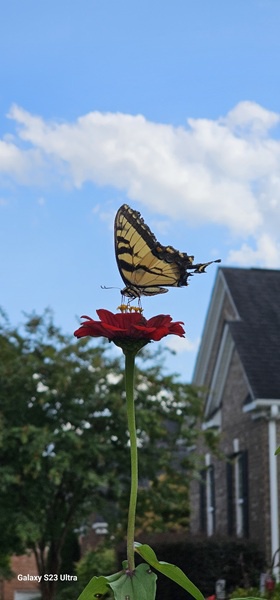
The goal is to support the butterflies that are already in your area. It helps you list the butterflies you see and then build the support they need in your garden. I use an example of the Tiger Swallowtails I see in my garden. I used this to make sure they had what they needed to increase their population. Below the organizer are more details of what I did to support the swallowtail populations.
Butterfly seen: Tiger Swallowtail
Caterpillars feed on (from references): Tuliptree, cherries, plum, others
Adults prefer to feed on (from references):
- Phlox (Phlox spp.)
- Ironweed (Vernonia spp.)
- Joe-Pye Weed (Eutrochium purpureum)
- Milkweed (Asclepias spp.)
In my garden they also liked these existing flowers * Zinnias * Mexican Sunflower
Water needs: Water “puddle”. More on providing water
Other needs and preferences: Resting places
I saw a Tiger Swallowtail on a flower in my garden. That triggered my research. Once I learned what the caterpillars feed on, I looked to see if those trees were around. I did find a Tuliptree in the woods near my house. The caterpillars were taken care of on that tree, so to make sure there was a continuous population, I needed to make sure the adult butterflies had what they needed. There were precious few gardens with flowers in this area. A few minutes of research revealed a list of flowers they liked.
My next steps were to plant the flowers from that list, starting gradually. Also made sure that there was shallow water available for them to get a drink and minerals. Now, every summer, more adults will survive to mate and lay eggs in the Tuliptree. The population will be sustained and possibly grow. All because I adjusted what I planted in my garden.
You can do the same! It allows you to build on what butterflies you already have to increase the population. Oh, and you get to enjoy all the butterflies.
See below for more tips and resources.
Continuous Improvement Seasonal Tips: Late Summer Early Fall
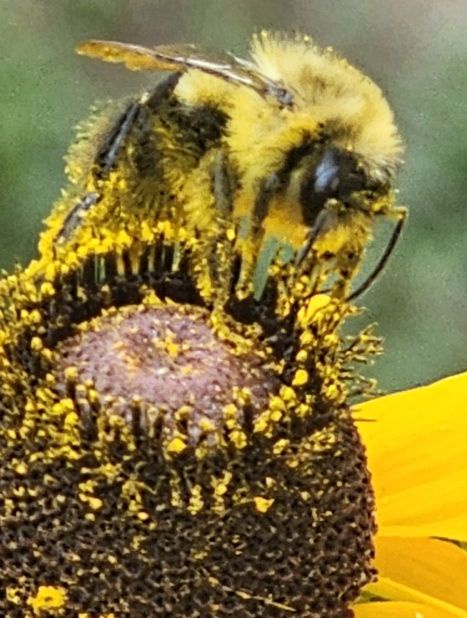
Many birds need seeds and berries in the fall. Bees and Butterflies need late-blooming flowers, too. Check your garden for these resources. Do you need more? If yes, make a note to remedy this next season by growing plants, shrubs, and/or trees to supply this need.
- Providing berries might seem like it would be difficult. But maybe not. In my area in the Southeastern U.S., I upgraded a native plant bed with a free young Beautyberry shrub that was growing wild nearby. I used seedlings from that one to expand to more.
- Pollinators need flowers through late summer and fall. Typically garden flowers are fizzling out by late summer. Do you have flowers that arrive in late summer and fall? In my area, these would include asters, and Goldenrod, even Passionvines (Maypops).
Recommended Resource
Pollinator-Friendly Native Plant Lists | Xerces Society Go here to find the plants you need to support butterflies, native bees, and more (in the U.S.). This page will help you find the best plants for where you live.
#HabitatGardening #BiodiversityGardening #Gardening #NativePlants #Nature #Environment #Conservation #Biodiversity #Invertebrates #SolarPunk
I’m Joe Wynne, a gardener since 1965 when I started as a helper for my grandmother. We maintained irises then and I still have those plants today. I’m a former Tennessee State Park Naturalist, who now focuses on making my garden a habitat for native plants and native bees, birds and butterflies. It’s working! I share what I learn.
Follow me on Mastodon. See articles from others in my magazine on Flipboard: Habitat Gardening
© Joe Wynne 2025-2026