Move Up with Shrubs and Vines
This time: Add an important vertical component to build your habitat; Enjoy and observe your garden
Have you noticed articles about native plants mainly cover flowering plants whose height may be no more than 3 feet (1 meter) high? That’s not enough. Your habitat garden should incorporate height – a vertical component – in its design.
A natural habitat, except for some desert areas, includes flowers, vines, shrubs, small trees and tall trees. Birds, butterflies and native bees are adapted to live in this vertical environment.
Now you don't have to have all the levels in your yard to create a decent habitat. Not everyone has room to add a giant oak tree. But the more levels you have, the better nature-positive design you create. If there are trees nearby, you can fill in with lower levels. Shrubs and vines should be on your design list.
🦋 Why native shrubs matter. Multiple organizations around the globe recommend that shrubs be incorporated into your habitat garden.
- Birds can nest in shrubs. They eat the berries. They use them as intermediate points to check for predators before they head over to a water source.
- Butterflies and hummingbirds feed on the nectar from the shrub’s flowers. They rest inside the branches from winds.
- Some butterfly caterpillars eat the leaves. Many caterpillars climb into shrubs to pupate.
How to find native shrubs. So how do you choose the best shrubs? Just like native flowering perennial plants, the shrubs sold at plant stores you go to may not be native. Many shrubs sold are beautiful but from other global environments that have not evolved in a relationship with the beneficial insects and birds in your area. So, you need to seek out a source that tells you specifically the native shrubs that are appropriate for your area.
As seen in previous posts, the resources provided by the NWF can help in North America. They provide, for every ecoregion, a list of all plants, including shrubs, ranked by how many native bees and butterflies they support.
To show you an example of the process to select the best shrubs to build your habitat, here's how I used the NWF Native Plant Finder site, with updated navigation. On the plant finder site, I entered my zip code for the U.S. (There is an alternate navigation to cover all North America.)
I got a page with two sections: “Flowers and Grasses” and “Trees and Shrubs”. This initial page already showed eight of the highest ranked trees and shrubs, but I chose “See All” under the Trees and Shrubs list to see the full list. It’s long, giving us many options.
I simply scrolled down to browse to see what natives fit into my landscape. The shrubs and vines are all mixed up together with the trees, so using this resource in this case takes some effort.
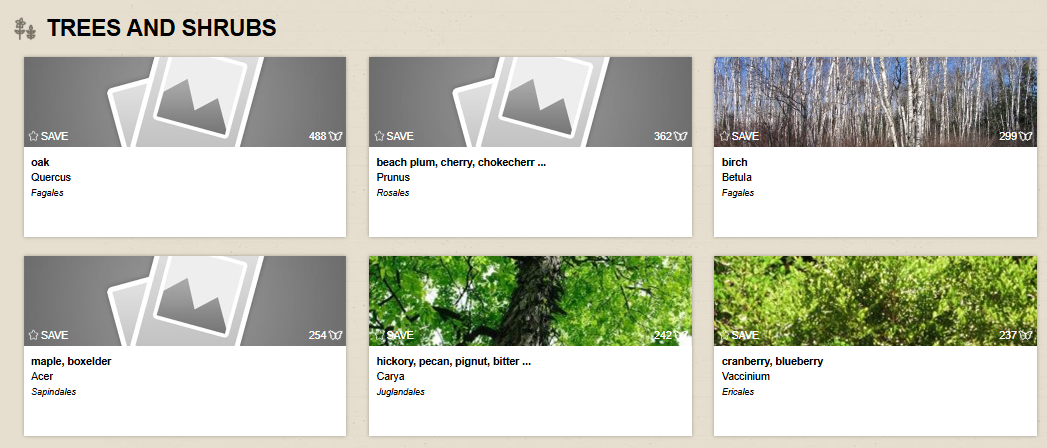 Screenshot from the National Wildlife Foundation’s Native Plant Finder site. This section is from the Trees and Shrubs category and shows, for example, oak trees, smaller plum and cherry trees, and cranberry and blueberry bushes, each supporting over 200 species of beneficial insects.
It was gratifying to see blueberries (bottom right in screenshot) as a highly ranked shrub and now I have two bushes. Add me to the number of supported species.
Blackberries appeared a little farther down in the list and already grew wild in my yard. Good excuse for avoiding large scale removal which would have led to my arms being shredded by the thorns. I allowed two areas to get taken over by blackberries. I wanted to eat some while leaving others for the birds.
There are native plant databases other than the NWF Plant Finder, refer to the Resources section for more, but this one ranks the shrubs by how many species they help. I am always surprised at the number of species that I can help in my habitat garden by choosing the best plants. It is easy to support hundreds of different types of beneficial insects with a few well-chosen plants. More bang for my buck.
You can follow the same steps to find the best shrubs for your garden.
🦋 Why native vines matter. Vines definitely don’t get enough attention. They add to the important vertical structure of your habitat and have ecological benefits the same as shrubs. They fill a different space need, though. Still, you don't see them covered enough in native plant articles and books.
They are perfect for covering metal or other fences. You can put a trellis or structure (pergola, for example) in your garden and let a vine climb all over it. You can let a vine climb along a porch or deck. When the vine lets its flowers loose, hummingbirds, native bees and butterflies all arrive. If you happen to be sitting in or around that structure, you have a unique enjoyment perspective.
I had a long, slim space between properties that was perfect to place vines. I procured some tall metal trellises for this purchase. I chose Coral Honeysuckle (Lonicera sempervirens) and Carolina Jessamine (Gelsemium sempervirens), also known by other names. These support our hummingbirds and pollinators with their nectar for months in the spring. Birds nest in them during the summer.
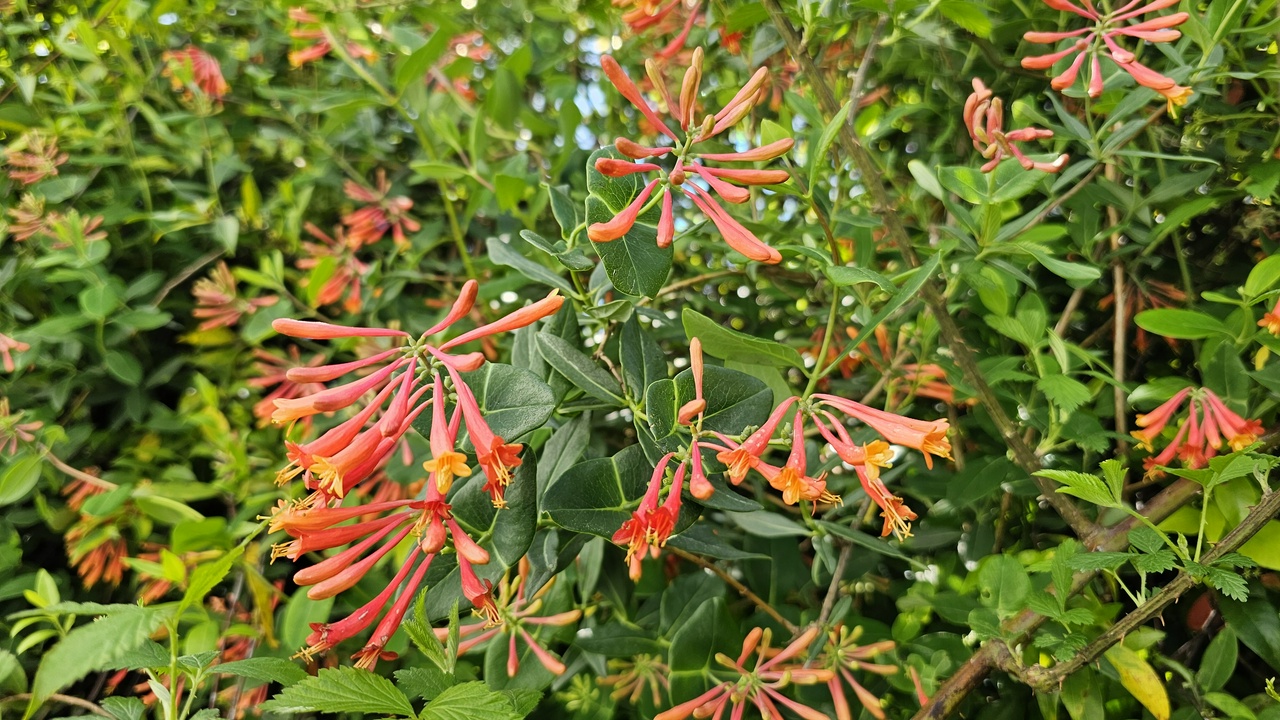
Native vines like Coral Honeysuckle (shown, with clusters of coral trumpets with yellow stamens peeking out) have cascades of flowers that beautify your garden while helping build a vertical component to your habitat garden.
An example of a native vine that grows in a wide area in the western U.S. is the Winding Mariposa Lily.
How to find native vines. You can find more about native vines for your area the same way you find shrubs. There is one caveat, however: It is difficult to search specifically for “vines” in the NWF or other native plant finders. You would have to go to the Shrubs and Trees section and check growth habits of those entries that you don’t know.
But the Lady Bird Johnson Wildflower Center has come to our rescue! They have a plant finder that allows users to select a vine category to search! See the Resources section below for link.
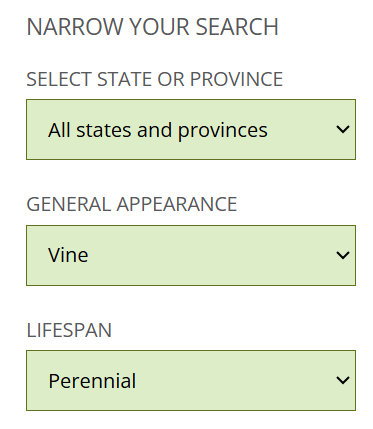
This is a section from the Lady Bird Johnson Wildflower Center native plant finder showing three drop-down menus: State or Province, General Appearance, where “Vine” has been selected, and Lifespan, where Perennial has been selected.
Now you can more easily plan to fit in a native vine when you find the perfect spot in your design. Give vines the respect they deserve!
Seasonal Continuous Improvement: Early Summer
Early summer is when you shift from planting to maintaining and observing. Why observing? It's important to enjoy your work, but also to make sure all the important supports are available and working.
🌾 Observe and Enjoy Your Habitat
Get into a habit of watching what goes on in your habitat. Note which plants attract the most activity. Look for new native bees and butterflies you have never seen. Check insect houses you set out to see if they are in use. Find invasive plants that you will remove later. Bringing along a little notebook may help keep track.
Do you see leaf damage? This is normal. Expect some leaf damage by caterpillars, leaf-cutter bees, and the like. This is a good sign. There is no need for insecticides. This is a significant mindset shift from traditional gardening. If you planted parsley, for example, you may see a large black swallowtail caterpillar on the plant.
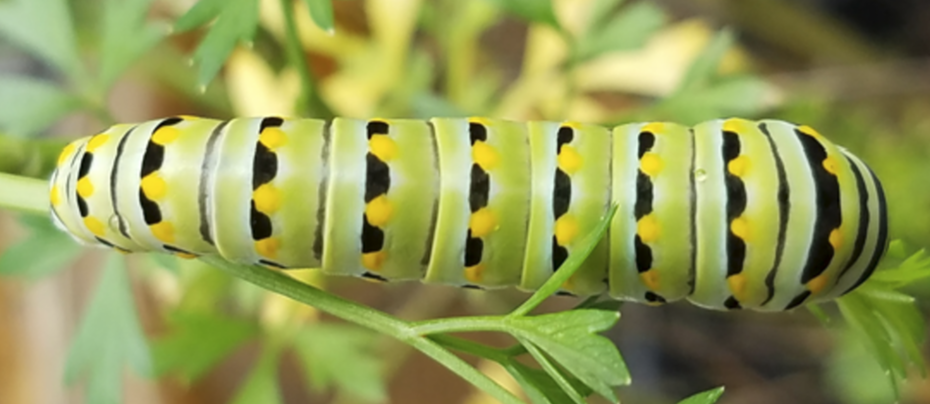
This caterpillar of a black swallowtail butterfly, in a beautiful pattern of light green with rows of alternating yellow and black is feeding on parsley that has been set out for it in a convenient spot in a native plant bed. My personal herb garden is protected. I grow parsley from seeds and start enough to feed all who live in the habitat.
Whatever you do, keep enjoying your habitat. Butterflies alone bring joy.
💧 Maintain Water for Beneficial Insects
Heat increases water demand for all wildlife. You may already have a birdbath for birds, but now is the time to set out water for beneficial insects if you haven't already. They need a shallow dish with water, adding stones or sticks so insects can land safely. You can also set out a sponge dish.
Make sure the water remains available. Refresh it every few days. This also keeps mosquitos from using the water for breeding.
There is additional guidance in the Resources section.
🌸 Keep Blooms Continuous
Pollinator populations rely on a steady food supply. Observe when your garden has flower gaps. Make plans to fill these gaps with more native plants, shrubs, vines or trees. Also,
- Deadhead appropriate plants to encourage repeat blooms. Check their needs for this if you're not sure. You will eventually leave seedheads for consumption by wildlife, but for now, keep the blooms coming.
- Add a few quick-blooming or already-blooming native plants to fill gaps if possible.
- You might want to start a chart showing what months you have blooms. Most gardeners start out well, but blooms start to fade by the fall. Plan to fill that gap.
🌱 Reduce Disturbance in Active Areas
Early summer is peak nesting and breeding season. Birds are feeding young and need foraging space. Native bees are nesting in your supplied housing, in stems or underground. Limit your time working in spaces that will disturb them.
Recommended Resources & Reading
Lady Bird Johnson Wildflower Center's Native Plant Database
Allows filtering for vines and shrubs for your area. You can also filter on amount of sunlight and other characteristics so that you can pinpoint the perfect plants.
National Wildlife Foundation Native Plant Finder
Find shrubs and vines in the Shrubs and Trees section. It’s takes an extra step to determine the growth habit (size and shape), but you get the benefit of seeing the number of how many species each plant supports.
Monarch Joint Venture — Structural habitat
This PDF from the Monarch Joint Venture discusses shrubs or fences as windbreaks, which create sheltered feeding and pupation areas for butterflies. It also has a Maintenance section that will help during your summer observation period.
Audubon Bird-Friendly Plants Guide – Pennsylvania (PDF)
Good example lists natives from short to tall, including vines, shrubs and small trees. In this way, it shows the different categories of vertical habitat building. You can think in these terms to plan your own vertical design to support hummingbirds, butterflies, and pollinators.
If You’re Thirsty, They’re Thirsty: Make a Simple Water Source to Support Pollinators
From the Xerces Society, describes how to meet the needs for various butterflies, native bees, and beneficial insects
Conserving Desert Pollinators and Water in Face of Climate Change
Tips specifically for those who maintain habitat gardens in dry areas,
Nesting Resources for Beneficial Insects
When you start observing your habitat, make sure your nesting areas and resources are being used. This guide from the Xerces Society shows what to look for.
5 Ways to Increase Nesting Habitat for Native Bees
If your habitat observation tells you that some improvements are needed, the Xerces Society provides these tips for supporting Native Bees.
Western Monarch Call to Action
This Western Monarch Call to Action, led by the Xerces Society for Invertebrate Conservation, aims to provide a set of rapid-response conservation actions that, if applied immediately, can help the western monarch population bounce back from its critically low overwintering size. You can help with some of these.
Western Monarchs Are in Trouble: This Is How You Can Help
In this guide, the Xerces Society offers simple steps that any individual can take to help support the western monarch population. This is intended as a companion document to the Western Monarch Call to Action, linked in the Related Resources list.
#HabitatGardening #BiodiversityGardening #Gardening #NativePlants #Nature #Environment #Conservation #Biodiversity #Invertebrates #Pollinators #BirdConservation #WildlifeWednesday
I’m Joe Wynne, a gardener since 1965 when I started as a helper for my grandmother. We maintained irises then and I still have those plants today. I’m a former Tennessee State Park Naturalist, who now focuses on making my garden a habitat for native plants and native bees, birds and butterflies. It’s working! I share what I learn.
Follow me on Mastodon. See articles from others in my magazine on Flipboard: Habitat Gardening
© Joe Wynne 2025-2026