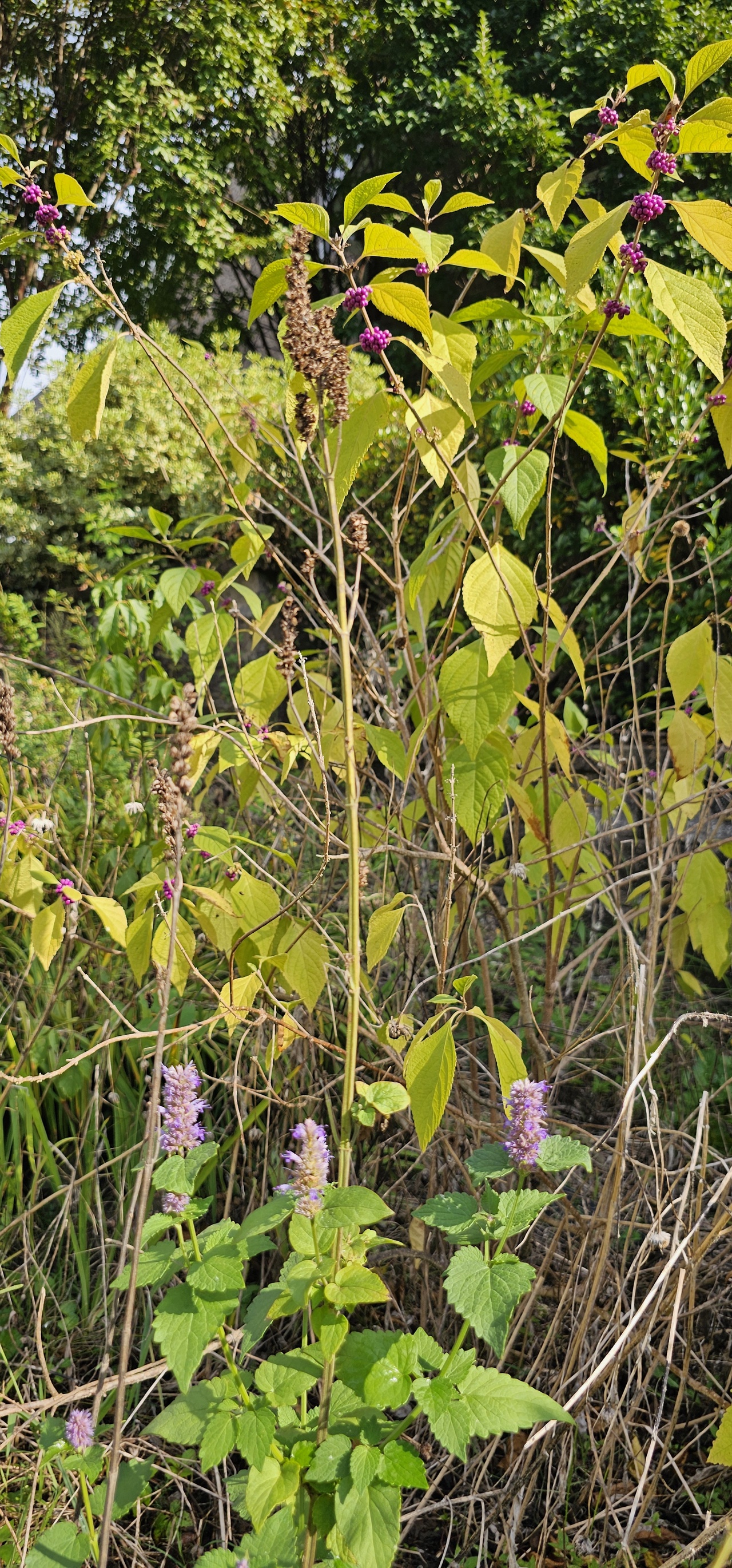
Build Existing Populations
This time: Gardening to build butterfly populations; Preparing for habitat over winter.
Important news for you, Garden Heroes.
A recent study found that species are being lost in the hottest parts of temperate regions even faster than in the tropics. That might sound discouraging, but it also means your help is even more impactful. Your garden or meadow of native plants is a part of a network that pollinators can use to survive and thrive. Your garden can play a meaningful role in reversing population decline.
If you’ve already added some native species to your space, that’s a great start. Your next step is to actively support species that already exist in and around your garden. Your goal is to increase the number of individuals of a species that live in your garden.
So how do you build larger populations? Using butterflies as an example, the process comes down to these steps:
1. Observe
Spend time watching your garden at different times of day. Make a note of butterflies that visit. When you see a butterfly that you do not know, take photos from multiple angles. Many species look similar, and small details matter for identification.
2. Identify Unknown Butterflies
Use a beginner-friendly guide or app to identify what you’re seeing. Some popular options are listed in the Resources section.
3. Find the Missing Need
When you look up life cycle information for butterflies, you will find that adults prefer certain kinds of flowers for nectar.
You will also find information about “host plants.” The adult butterfly lays eggs on its host plant and the caterpillars hatch out and start eating like mad. Caterpillars are very particular about their diet. They often eat only one or two types of plants.
You can make a simple note page to keep track of visiting butterflies and how to support them.
It might be organized like this.
Butterfly Species
- Host Plant(s)
- Support Steps
Here are a couple of examples from my habitat garden. I saw two types of butterflies – Buckeyes and Tiger Swallowtails – on my native perennials and looked up host plant information so that I could support a larger population for each of these species.
Buckeye
Host plant: Plantain
Support steps:
- Allow plantains to grow in native plant beds.
- Attempt to relocate plantains growing in the lawn, or collect their seeds and move them to native plant beds.
- Monitor the plants for signs that caterpillars are eating them.
Eastern Tiger Swallowtail
Host plants:
- Cottonwood; Willow; Tulip tree
These trees are available in nearby woods.
Support steps:
- Maintain tall-flowering native plants to provide nectar for a larger population.
- Ensure flowers are available from spring through fall.
4. Support
These observations and notes suggested that I could support Buckeye populations by providing more plantains, a common “weed” that is being removed from surrounding suburban lawns. I could support Tiger Swallowtail populations by providing more tall native nectar plants.
Once you find the need for your butterfly populations, you are ready to increase their numbers. You might incorporate more host plants into your garden or increase certain types of nectar plants.
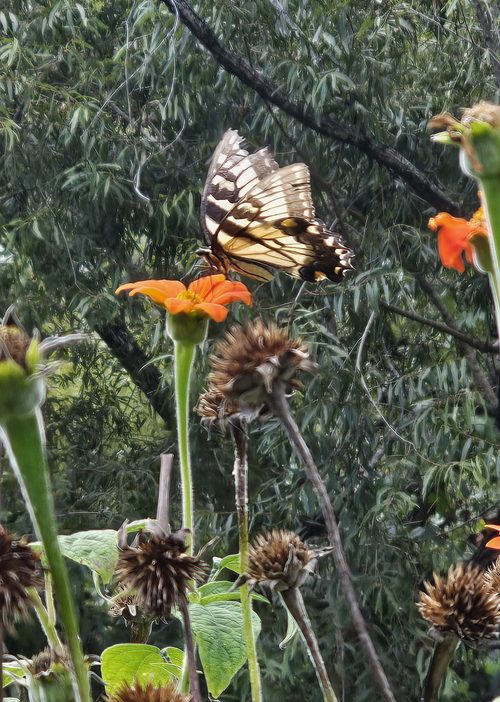
A Tiger Swallowtail, yellow with black stripes, feeds on a tall orange flower with seed heads. The seed heads are being left for birds to feed on and to grow the following year. The tall, thick stems will be left in this garden bed for beneficial insects to overwinter inside.
With this kind of support, you can increase the type and number of butterflies you see daily in the summer. Let me tell you that sitting among fluttering butterflies is one of the more calming things you can experience.
Butterflies are just an example here. You can do the same for moths. Native bees are somewhat easier because they do not generally have host plants, but they do need places for their nests and larva. The big picture is: Look at the creature that visits, identify it, find the need, and then support it in your habitat garden.
Seasonal Continuous Improvement: Autumn
When you're managing a Habitat Garden, what you do and do not do in Autumn is different than traditional gardening. One of the things you need to do is evaluate your late season flowering. One of the tasks you can ignore is “clean-up” of most dead or dying plants. Shocking, I know.
🌸Find Your Fall Flowering Gap
You might be surprised at what you see in your habitat garden in mid-fall: few flowers. Most of the native species you plant in the spring and summer complete their flowering cycle by this time. Sure, you can deadhead many to keep them going much longer, but eventually they fade out.
You might see butterflies, native bees and other pollinators looking for something to eat at this time before the first frost hits (if frost happens where you live).
It is very important for your habitat garden to supply a variety of flowers throughout your growing season. If you do have few or no flowering plants in the fall, then plan to identify late-season flowering native plants for your region that you can have ready to go for the following Autumn.
This is not difficult. When I did this, I found that in my region there were many types of goldenrod and asters that met this need and they were easily available as seed. To do the same, you need a native plant reference specific for your “ecoregion’ and you can find those in the Resources section.
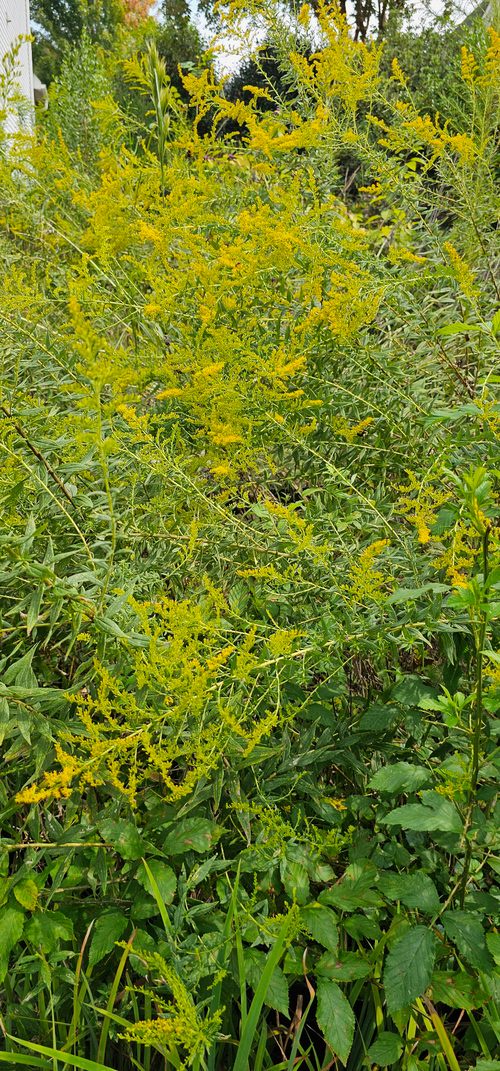
Sprays of tall Goldenrod – up to seven feet tall – fill a space in a native plant garden in early fall.
🌾Save the Stems
Other than checking for number of flowers, appropriate actions to take in the fall are different depending on your region. In the Resources section below, you will find more specific advice for plants and tasks in your region for Autumn.
While you are noticing your fall habitat garden, you might see some dead stems of plants that have gone by. Your initial tendency may be to remove these – as is expected in traditional gardening. You might even plan to transfer the stems over to the compost pile.
But it far is better to retain healthy standing stalks and seedheads. In Nature, flower stems remain long after the flower dies. Stalks are potential nesting/overwintering habitat. They will definitely be needed by beneficial invertebrates in the spring, so you will want to keep them available.
🍂Leave The Leaves
You've heard it before. Leave fallen leaves below the trees. This allows certain insects to follow their instincts and drop right down into the leaf layer for overwintering.
But have you heard to leave them whole? The Xerces Society says shredded leaves do not provide the same cover as whole leaves, and that shredding may destroy insect eggs, caterpillars, and cocoons. It recommends using a rake or blower rather than a mower when moving leaves so they remain intact.
It's not always possible to leave leaves under trees. If you need other options, I listed some of my tricks in a previous Seasonal Improvement section here.
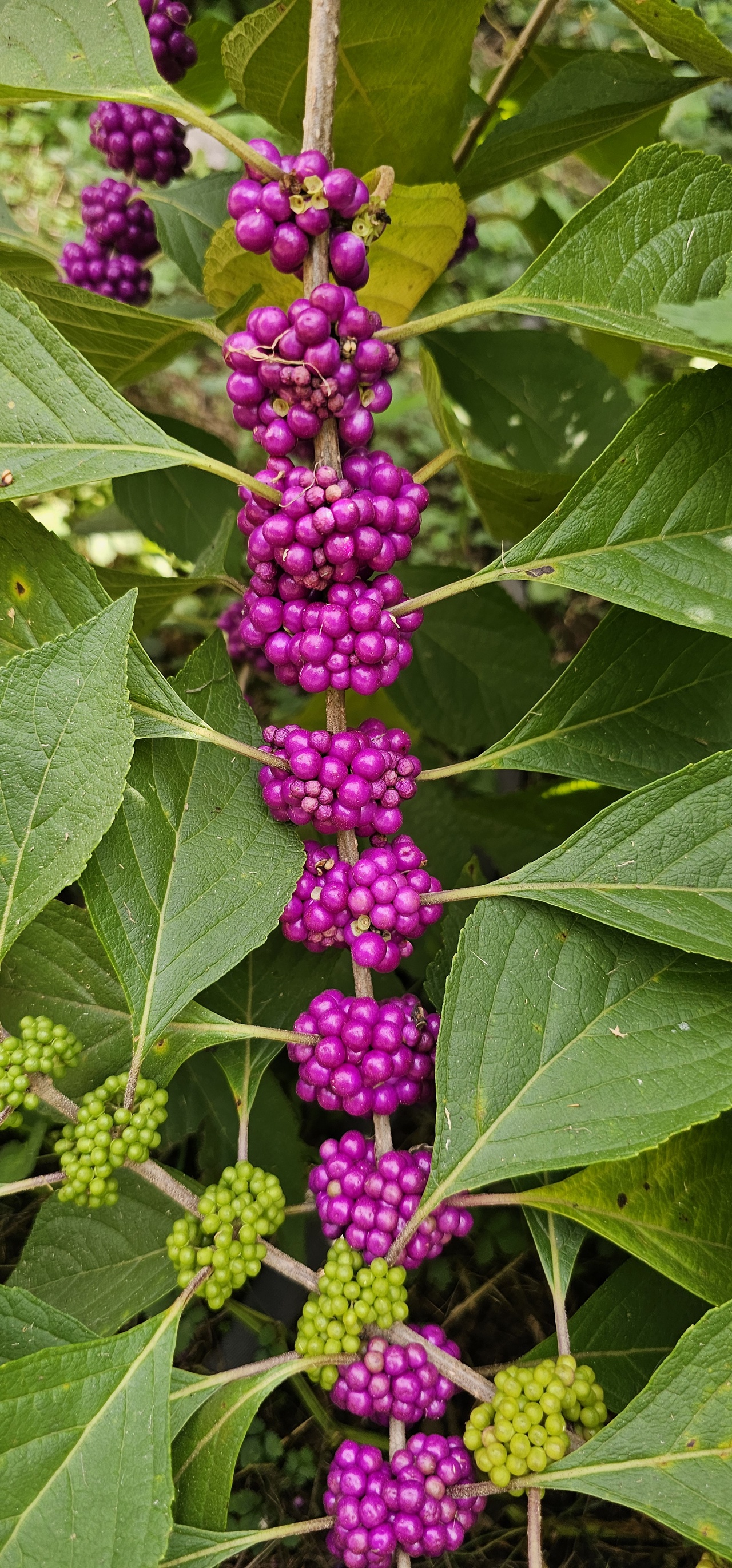
Abundant bright purple berries of the beautyberry shrub. These last for many weeks in Autumn in my garden, feeding a variety of birds and mammals, maybe even box turtles.
Recommended Resources & Reading
🦋 Tools for Identifying Insects
This is a great tool if you are just starting out. It uses image recognition to identify plants, animals, fungi, and other organisms through your phone camera. There's no registration so you can see how you like identification.
This is the standard tool for enthusiasts and citizen scientists (If you are habitat gardener, consider yourself a citizen scientist.) You can document observations, and other members of the community can contribute identifications. iNaturalist specifically encourages insect observations as a way to learn about local ecosystems and contribute to biodiversity and conservation research. Check out this guide to get a feel for this app: iNaturalist's beginner guide to insect watching
This app is made for people who want more information about an insect after photographing it, like a habitat gardener. The good news is that it provides detailed identification reports, including information about life cycles and host plants. The bad news is that some features require a subscription.
🦋 Tools for Identifying Late Season Flowering Perennials for Your Region
The Xerces Society has collaborated with the Lady Bird Johnson Wildflower Center to create plant lists that are attractive to native bees, bumble bees, honey bees, and other beneficial insects, as well as plant lists with value as nesting materials for native bees. These lists can be narrowed down with additional criteria such as state, soil moisture, bloom time, and sunlight requirements.
Includes lists for every state and province plus much more.
🦋 Guides for Fall Tasks in Your Region
- Nesting & Overwintering Habitat | Xerces Society
- Leave the Leaves! | Xerces Society
- Fall Chores in the Pollinator Garden: Leave the Leaves and Save the Stems! | NC State Extension
- Fall Garden Care for Pollinators | Penn State Extension
- California Pollinator Conservation Resources
- Pacific Northwest Pollinator Conservation Resources
#HabitatGardening #WildflowerWednesday #BiodiversityGardening #Gardening #NativePlants #Nature #Environment #Conservation #Biodiversity #Invertebrates #Pollinators #BirdConservation #Wildlife #Birds
I’m Joe Wynne, a gardener since 1965 when I started as a helper for my grandmother. We maintained irises then and I still have those plants today. I’m a former Tennessee State Park Naturalist, who now focuses on making my garden a habitat for native plants and native bees, birds and butterflies. It’s working! I share what I learn.
Follow me on Mastodon. See articles from others in my magazine on Flipboard: Habitat Gardening
© Joe Wynne 2025-2026