Habitat Gardening

nature

This time: Add an important vertical component to build your habitat; Enjoy and observe your garden


Have you noticed articles about native plants mainly cover flowering plants whose height may be no more than 3 feet (1 meter) high? That’s not enough. Your habitat garden should incorporate height – a vertical component – in its design.

A natural habitat, except for some desert areas, includes flowers, vines, shrubs, small trees and tall trees. Birds, butterflies and native bees are adapted to live in this vertical environment.

Now you don't have to have all the levels in your yard to create a decent habitat. Not everyone has room to add a giant oak tree. But the more levels you have, the better nature-positive design you create. If there are trees nearby, you can fill in with lower levels. Shrubs and vines should be on your design list.

🦋 Why native shrubs matter. Multiple organizations around the globe recommend that shrubs be incorporated into your habitat garden.

  • Birds can nest in shrubs. They eat the berries. They use them as intermediate points to check for predators before they head over to a water source.
  • Butterflies and hummingbirds feed on the nectar from the shrub’s flowers. They rest inside the branches from winds.
  • Some butterfly caterpillars eat the leaves. Many caterpillars climb into shrubs to pupate.

How to find native shrubs. So how do you choose the best shrubs? Just like native flowering perennial plants, the shrubs sold at plant stores you go to may not be native. Many shrubs sold are beautiful but from other global environments that have not evolved in a relationship with the beneficial insects and birds in your area. So, you need to seek out a source that tells you specifically the native shrubs that are appropriate for your area.

As seen in previous posts, the resources provided by the NWF can help in North America. They provide, for every ecoregion, a list of all plants, including shrubs, ranked by how many native bees and butterflies they support.

To show you an example of the process to select the best shrubs to build your habitat, here's how I used the NWF Native Plant Finder site, with updated navigation. On the plant finder site, I entered my zip code for the U.S. (There is an alternate navigation to cover all North America.)

  1. I got a page with two sections: “Flowers and Grasses” and “Trees and Shrubs”. This initial page already showed eight of the highest ranked trees and shrubs, but I chose “See All” under the Trees and Shrubs list to see the full list. It’s long, giving us many options.

  2. I simply scrolled down to browse to see what natives fit into my landscape. The shrubs and vines are all mixed up together with the trees, so using this resource in this case takes some effort.  Screenshot from the National Wildlife Foundation’s Native Plant Finder site. This section is from the Trees and Shrubs category and shows, for example, oak trees, smaller plum and cherry trees, and cranberry and blueberry bushes, each supporting over 200 species of beneficial insects.
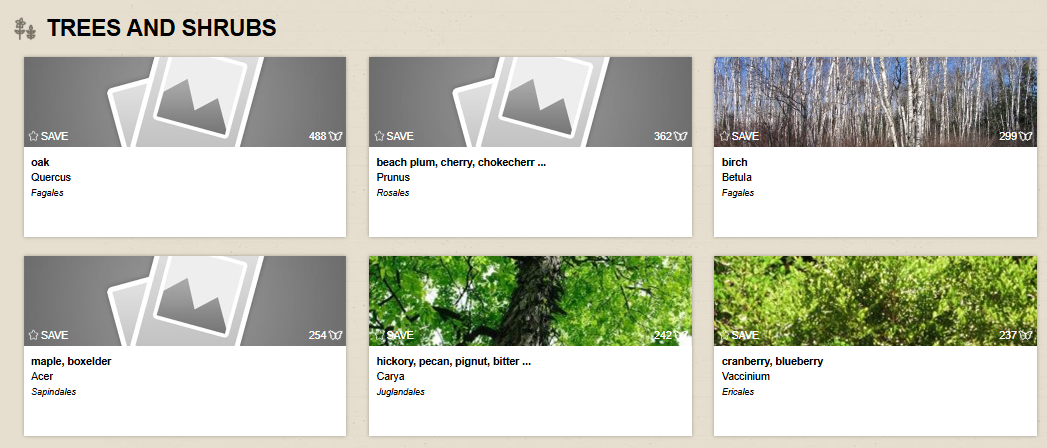
It was gratifying to see blueberries (bottom right in screenshot) as a highly ranked shrub and now I have two bushes. Add me to the number of supported species.

Blackberries appeared a little farther down in the list and already grew wild in my yard. Good excuse for avoiding large scale removal which would have led to my arms being shredded by the thorns. I allowed two areas to get taken over by blackberries. I wanted to eat some while leaving others for the birds.

There are native plant databases other than the NWF Plant Finder, refer to the Resources section for more, but this one ranks the shrubs by how many species they help. I am always surprised at the number of species that I can help in my habitat garden by choosing the best plants. It is easy to support hundreds of different types of beneficial insects with a few well-chosen plants. More bang for my buck.

You can follow the same steps to find the best shrubs for your garden.

🦋 Why native vines matter. Vines definitely don’t get enough attention. They add to the important vertical structure of your habitat and have ecological benefits the same as shrubs. They fill a different space need, though. Still, you don't see them covered enough in native plant articles and books.

They are perfect for covering metal or other fences. You can put a trellis or structure (pergola, for example) in your garden and let a vine climb all over it. You can let a vine climb along a porch or deck. When the vine lets its flowers loose, hummingbirds, native bees and butterflies all arrive. If you happen to be sitting in or around that structure, you have a unique enjoyment perspective.

I had a long, slim space between properties that was perfect to place vines. I procured some tall metal trellises for this purchase. I chose Coral Honeysuckle (Lonicera sempervirens) and Carolina Jessamine (Gelsemium sempervirens), also known by other names. These support our hummingbirds and pollinators with their nectar for months in the spring. Birds nest in them during the summer.
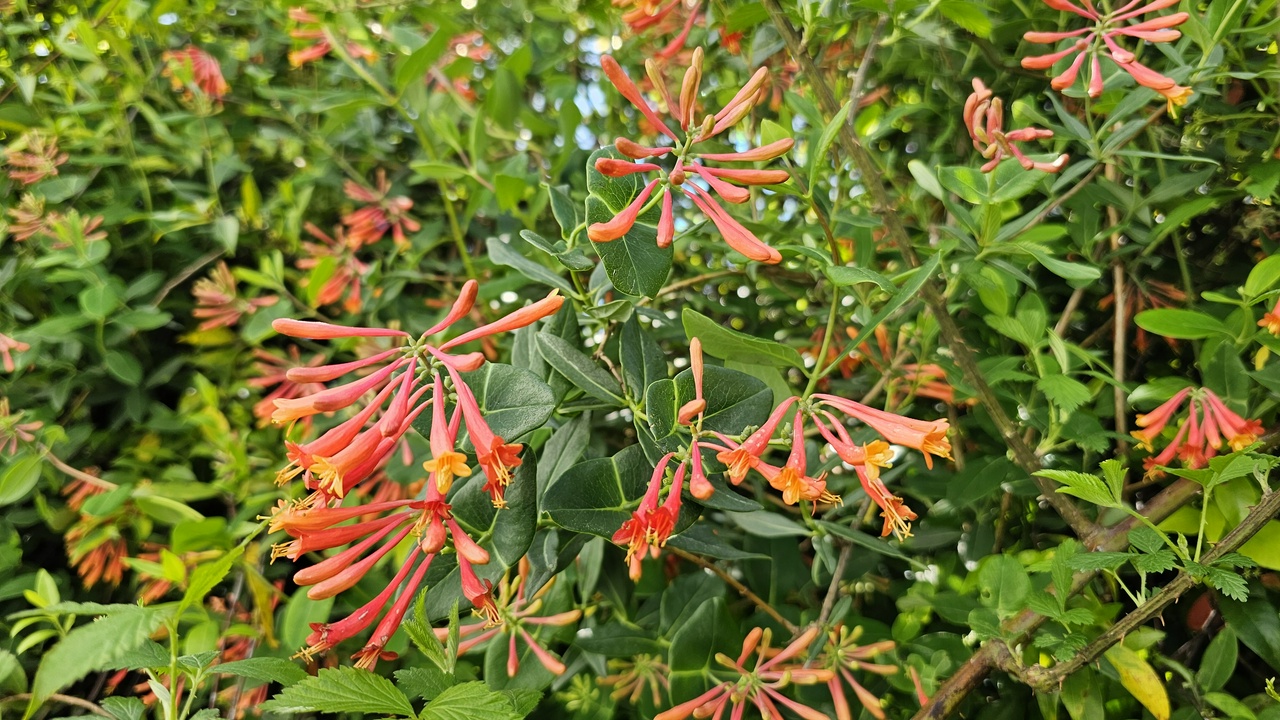
Native vines like Coral Honeysuckle (shown, with clusters of coral trumpets with yellow stamens peeking out) have cascades of flowers that beautify your garden while helping build a vertical component to your habitat garden.

An example of a native vine that grows in a wide area in the western U.S. is the Winding Mariposa Lily.

How to find native vines. You can find more about native vines for your area the same way you find shrubs. There is one caveat, however: It is difficult to search specifically for “vines” in the NWF or other native plant finders. You would have to go to the Shrubs and Trees section and check growth habits of those entries that you don’t know.

But the Lady Bird Johnson Wildflower Center has come to our rescue! They have a plant finder that allows users to select a vine category to search! See the Resources section below for link.
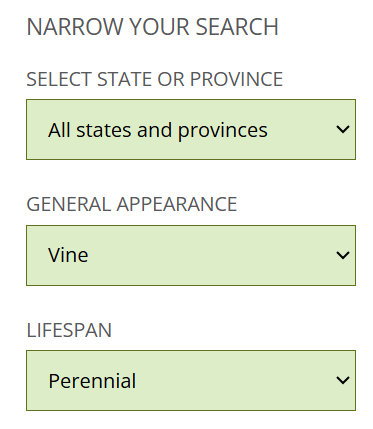
This is a section from the Lady Bird Johnson Wildflower Center native plant finder showing three drop-down menus: State or Province, General Appearance, where “Vine” has been selected, and Lifespan, where Perennial has been selected.

Now you can more easily plan to fit in a native vine when you find the perfect spot in your design. Give vines the respect they deserve!


Seasonal Continuous Improvement: Early Summer

Early summer is when you shift from planting to maintaining and observing. Why observing? It's important to enjoy your work, but also to make sure all the important supports are available and working.

🌾 Observe and Enjoy Your Habitat

Get into a habit of watching what goes on in your habitat. Note which plants attract the most activity. Look for new native bees and butterflies you have never seen. Check insect houses you set out to see if they are in use.  Find invasive plants that you will remove later. Bringing along a little notebook may help keep track.

Do you see leaf damage? This is normal. Expect some leaf damage by caterpillars, leaf-cutter bees, and the like. This is a good sign. There is no need for insecticides. This is a significant mindset shift from traditional gardening. If you planted parsley, for example, you may see a large black swallowtail caterpillar on the plant.
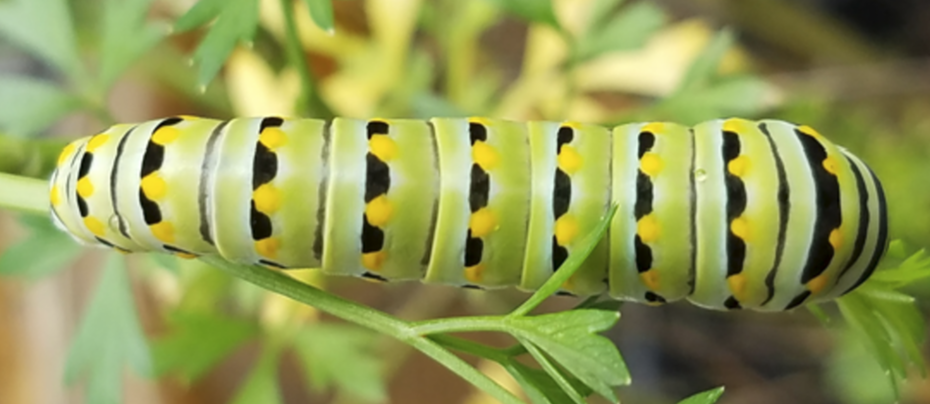
This caterpillar of a black swallowtail butterfly, in a beautiful pattern of light green with rows of alternating yellow and black is feeding on parsley that has been set out for it in a convenient spot in a native plant bed. My personal herb garden is protected. I grow parsley from seeds and start enough to feed all who live in the habitat.

Whatever you do, keep enjoying your habitat. Butterflies alone bring joy.

💧 Maintain Water for Beneficial Insects

Heat increases water demand for all wildlife. You may already have a birdbath for birds, but now is the time to set out water for beneficial insects if you haven't already. They need a shallow dish with water, adding stones or sticks so insects can land safely. You can also set out a sponge dish.

Make sure the water remains available. Refresh it every few days. This also keeps mosquitos from using the water for breeding.

There is additional guidance in the Resources section.

🌸 Keep Blooms Continuous

Pollinator populations rely on a steady food supply. Observe when your garden has flower gaps. Make plans to fill these gaps with more native plants, shrubs, vines or trees. Also,

  • Deadhead appropriate plants to encourage repeat blooms. Check their needs for this if you're not sure. You will eventually leave seedheads for consumption by wildlife, but for now, keep the blooms coming.
  • Add a few quick-blooming or already-blooming native plants to fill gaps if possible.
  • You might want to start a chart showing what months you have blooms. Most gardeners start out well, but blooms start to fade by the fall. Plan to fill that gap.

🌱 Reduce Disturbance in Active Areas

Early summer is peak nesting and breeding season. Birds are feeding young and need foraging space. Native bees are nesting in your supplied housing, in stems or underground. Limit your time working in spaces that will disturb them.


Lady Bird Johnson Wildflower Center's Native Plant Database

Allows filtering for vines and shrubs for your area. You can also filter on amount of sunlight and other characteristics so that you can pinpoint the perfect plants.

National Wildlife Foundation Native Plant Finder

Find shrubs and vines in the Shrubs and Trees section. It’s takes an extra step to determine the growth habit (size and shape), but you get the benefit of seeing the number of how many species each plant supports.

Monarch Joint Venture — Structural habitat

This PDF from the Monarch Joint Venture discusses shrubs or fences as windbreaks, which create sheltered feeding and pupation areas for butterflies. It also has a Maintenance section that will help during your summer observation period.

Audubon Bird-Friendly Plants Guide – Pennsylvania (PDF)

Good example lists natives from short to tall, including vines, shrubs and small trees. In this way, it shows the different categories of vertical habitat building. You can think in these terms to plan your own vertical design to support hummingbirds, butterflies, and pollinators.

If You’re Thirsty, They’re Thirsty: Make a Simple Water Source to Support Pollinators

From the Xerces Society, describes how to meet the needs for various butterflies, native bees, and beneficial insects

Conserving Desert Pollinators and Water in Face of Climate Change

Tips specifically for those who maintain habitat gardens in dry areas,

Nesting Resources for Beneficial Insects

When you start observing your habitat, make sure your nesting areas and resources are being used. This guide from the Xerces Society shows what to look for.

5 Ways to Increase Nesting Habitat for Native Bees

If your habitat observation tells you that some improvements are needed, the Xerces Society provides these tips for supporting Native Bees.

Western Monarch Call to Action

This Western Monarch Call to Action, led by the Xerces Society for Invertebrate Conservation, aims to provide a set of rapid-response conservation actions that, if applied immediately, can help the western monarch population bounce back from its critically low overwintering size. You can help with some of these.

Western Monarchs Are in Trouble: This Is How You Can Help

In this guide, the Xerces Society offers simple steps that any individual can take to help support the western monarch population. This is intended as a companion document to the Western Monarch Call to Action, linked in the Related Resources list.


#HabitatGardening #BiodiversityGardening #Gardening #NativePlants #Nature #Environment #Conservation #Biodiversity #Invertebrates #Pollinators #BirdConservation #WildlifeWednesday

I’m Joe Wynne, a gardener since 1965 when I started as a helper for my grandmother. We maintained irises then and I still have those plants today. I’m a former Tennessee State Park Naturalist, who now focuses on making my garden a habitat for native plants and native bees, birds and butterflies. It’s working! I share what I learn.

Follow me on Mastodon. See articles from others in my magazine on Flipboard: Habitat Gardening

© Joe Wynne 2025-2026
This time: Plant your seedlings; Improve preparations for extreme climate conditions


Your seedlings are ready; the soil is prepared and now comes the rewarding part: planting. Whether you’ve grown native plants from seed, picked up healthy starts from a nursery, or are ready with direct-sow seeds, this is the big moment!

Take a moment to make sure you get everything right.

🌿 Consider spacing. Before you begin, take a little time to review the spacing guidance for each species you’re planting. Different natives have different preferences for spacing. Following those recommendations will give your plants the best chance to establish quickly and reduce problems later.

If you're planting multiple species in the same bed, and they all have different spacing requirements, it can get a bit complicated. I have a small metal tape measure that I have used for these situations. The good news is that you really just have to do this once per bed. You are planting perennials after all.

🌻 Follow your garden design for placement.  Ideally, you’ve already roughed out a basic design while planning your plant purchases (previously covered here). That doesn’t mean every plant has to go in an exact spot, but having a general layout makes planting days smoother. Just like traditional gardening, native plant gardens can be formal, informal, or somewhere in between.

Set out your seedlings, starts, and seeds so that you can assess where each will go. Some seeds that you started before planting season may not have germinated. (It happens!) Check to see how this effects where you place what items.

I live in Suburbia, so I have this length of space on the far side of the driveway that is perfect for a mini-prairie design. It also holds any extra plants or seeds I end up not finding a place for.

🌱 Consider the seeds. Don't forget your direct-sow seeds! They may have been forgotten in all the effort to grow seedlings in the off-season. For designed beds, leave a space for seeds where their height will fit. Again, follow directions for spacing and consider nearby plants.

🚿 Follow traditional gardening best practices in early days. Once planted, keep the soil consistently moist for the first few weeks. That steady moisture helps young roots expand into the surrounding soil and settle in. This is no different than traditional gardening.

There are many more tips in the Resources section below.

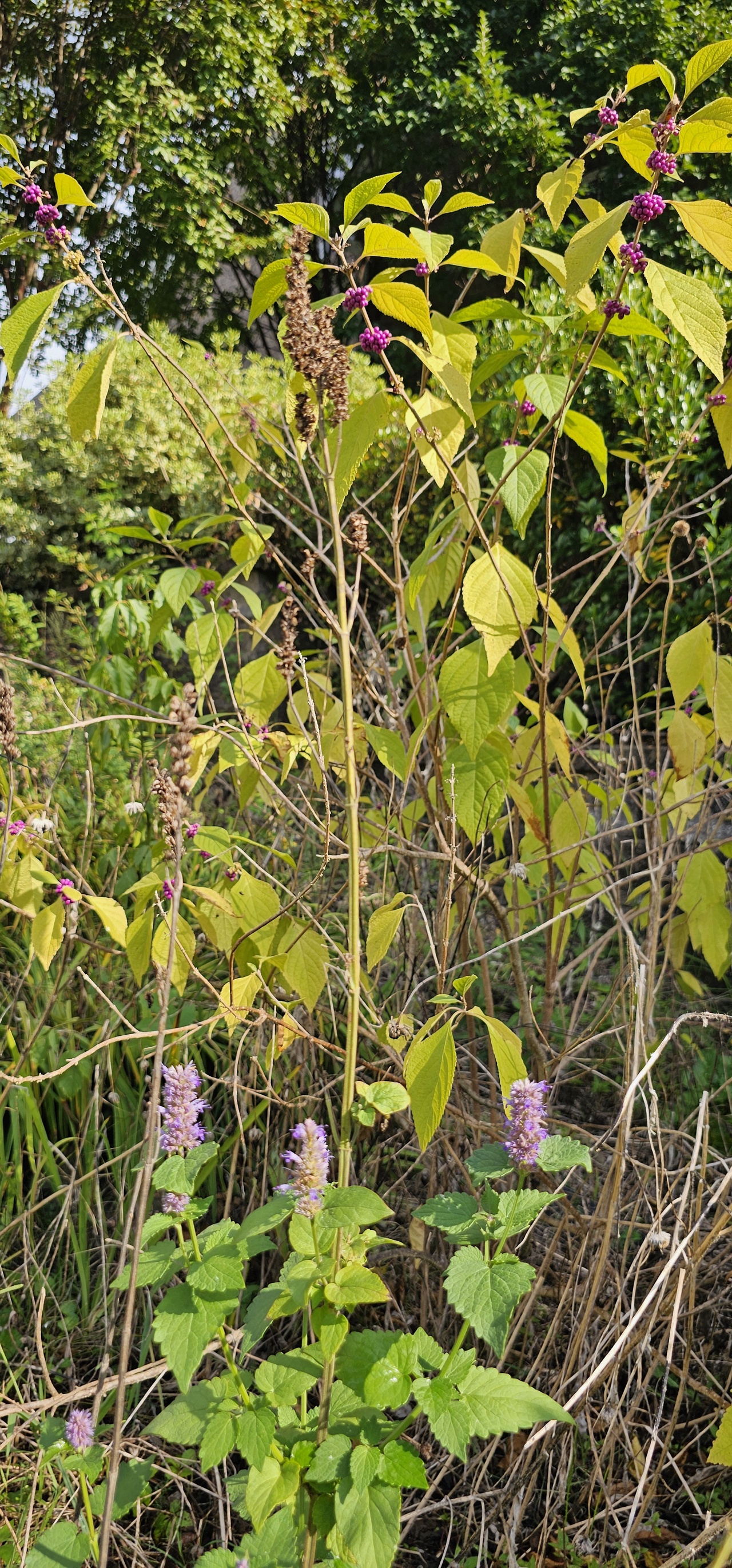
Here is a portion of my yellow/purple native plant bed, showing a shrub in the background, American Beautyberry, which has bright purple berries along its branches. In the foreground, Anise Hyssop, coordinates with purple spikes of flowers. Both of these had survived two periods of four weeks in summer heat with no rain. This is becoming more common here. The shrub suffered – you can see leaves are sparse – but survive it did. I did not water so that I could see how resilient these native plants can be. (That’s why I’m not embarrassed to show this pic.) The non-natives in my garden needed water constantly.


Seasonal Continuous Improvement: Late Spring / Early Summer

Think about last year. How did your native plants garden handle dry spells? Or extreme heat? Or higher than expected rainfall? Or whatever significant problems you experience in your area at some point in the growing season? Think about improvements that will help your plants thrive. Some examples:

  • Improve physical water retention methods. I started shaping certain beds in curves to hold water from hard rains where too much would run off.
  • Extend garden beds away from growing shrubs and trees. It’s very common to place plants too close to shrubs. After a couple of years, everyone is fighting over space, water, and nutrients.
  • Too much water always collecting in an area, drowning your natives? Change out plants to favor those that like it wet and make a rain garden!
  • Manage mini-prairie flowers seeding into your adjacent lawn by expanding the bed! The lawn is less important! Of course, if this is going to get you in trouble with neighbors or the HOA, be careful.

Start planning in early summer to complete urgent improvements. This gives you time to perfect designs, gather materials, and be ready for the best time to complete them.

Here are a couple of tips that are generally useful.

Compost builds the soil into root-thriving paradise. Habitat gardening, where you leave the soil layers intact, benefits from the use of compost even more than traditional gardening. A layer of compost ensures the soil is alive with beneficial insects, bacteria, and fungi, all working together to provide your native plant roots with what they need.

Some native plants that you grow may prefer soil that is found normally in your area and not the deeply “fluffy” soil that is often the goal of traditional gardening. You don’t need a large layer of compost for these plants, just enough to simulate organic matter that naturally accumulates on the soil surface.

Becoming a native plant gardener lets you see the importance of starting your own compost operation. You can check the many resources for composting if you are new to it. I have a simple small bucket collector in my kitchen and a simple cube bin in my back yard that produces the vast majority of what I need all year. I have added some links to get you started below in the Resources section.

Mulching for natives is not the same as traditional gardening. A good layer of mulch helps retain precious soil moisture, suppresses weeds that compete for nutrients, and moderates soil temperatures as days grow hotter. This is all good.

But in native gardens, we need to think about ground-dwelling bees who cannot reach the soil under traditional mulch. We need to think about how modern mulches with long-lasting color have dyes that cause the mulch to form a dense, hard layer that beneficial insects cannot penetrate.

Instead, create your own mulch from leaves, even small natural debris available locally. You can even include the compost you are making.

More about composting in the Resources section below.


Resources

How Far Apart Should I Plant Native Plants?

An excellent spacing reference for beginners. It walks through how mature plant size, growth habit, and planting density influence plant health, weed pressure, and long‑term maintenance, helping gardeners avoid overcrowding or overly sparse beds.

Guide for Beginning Native Plant Gardeners

A thorough introduction to native gardening fundamentals from Grow Native!. This guide explains how native plants grow and spread over time, why proper spacing matters, and how different design styles – from formal borders to naturalistic plantings – affect layout decisions.

Caring for Your Native Seedlings

From the Wild Seed Project, a practical, easy‑to‑read guide covering the critical early stages of seedling care. Topics include watering, crowding, repotting, and understanding the slower first‑year growth common to many native perennials.

Compost and the Native Plant Garden

This guide from The Wild Ones explores how compost fits into native plant gardening, including when it helps and when nature does the work on its own.

The Beginner’s Guide to Composting

A simple, no‑jargon overview that emphasizes composting as a natural, low‑stress process from Compost Magazine.

Compost 101: How to Start Composting for Beginners

From Epic Gardening,_ a clear, science‑based introduction that explains what compost is, why piles fail, and how compost improves garden soil.


#HabitatGardening #BiodiversityGardening #Gardening #NativePlants #Nature #Environment #Conservation #Biodiversity #Invertebrates #SolarPunk #WildflowerWednesday

I’m Joe Wynne, a gardener since 1965 when I started as a helper for my grandmother. We maintained irises then and I still have those plants today. I’m a former Tennessee State Park Naturalist, who now focuses on making my garden a habitat for native plants and native bees, birds and butterflies. It’s working! I share what I learn.

Follow me on Mastodon. See articles from others in my magazine on Flipboard: Habitat Gardening

© Joe Wynne 2025-2026
This Time: Prepare soil for native plants; Protect wildflowers that bloom early


How about some good gardening news? How about guidance that tells you to do a lot less than you expect to do? Well, I have some, but it's going to force you to break with some traditional gardening techniques, so you may feel a little uncomfortable at first.

If you've followed the process to this point you have purchased seeds or live plants and started the germinating and growing process in small pots or trays. Now, you're ready to get out there and prepare the soil for planting! For traditional gardening, that means cutting into the garden bed soil to loosen it, adding special amendments, and smoothing out the surface.

But I have good news for you: You don't have to do that for native plants! And if you do, you might be making the situation worse.

Let Go of Traditional Gardening Habits, Embrace Soil Communities

Native plants evolved to live in conjunction with certain neighbors. The plants, fungi, bacteria, insects, earthworms and more all existed in an interdependent community. The community was sustainable, resilient.

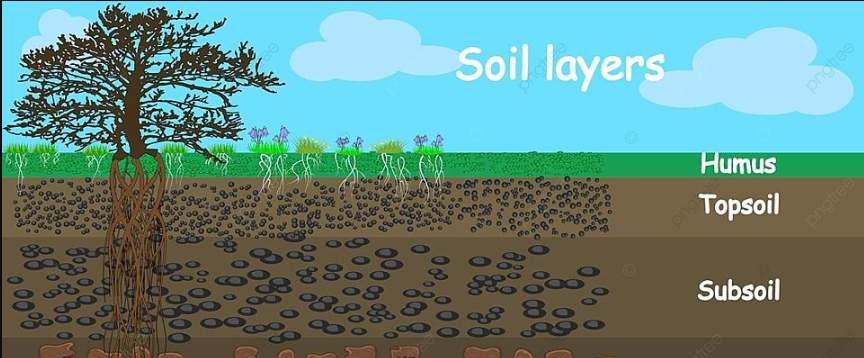
What’s more, soil has layers where different organisms live out their lives.  Soil organisms take natural materials such as dried leaves and minerals and recycle them into nutrients used by the plants.

When you disrupt these communities, by digging through them or dousing them with pesticides, you interfere with processes that support thriving native plants and that could make your life easier.

Alt text:  Section of typical soil layers near the surface, humus at the top, with topsoil underneath, and subsoil below that. Native plant roots are adapted to grow in natural layers in soil. Mimicking nature provides them with better moisture and nutrition. Prairie-type garden soils are different from woodland-type garden soils, but they both have layers that should be preserved. Source: Humus Definition Social Studies at John Macdonald blog.

When your Habitat Garden supports soil communities, the soil communities take care of your native plants. Less digging means less fertilizing and less watering. How does that sound?

So, there are a few specific things you don’t need to do anymore to prepare soil for native plants:

  • Don't “fix” your soil with amendments before planting.
  • Don't use herbicides, fungicides, or pesticides.
  • Don’t seal soil under layers of fabric and mulch.

Here's how you do prepare soil for native plants.

Clear Gently, Not Chemically

If weeds have overgrown the area set aside for your native plants, use physical methods like hand‑pulling, cutting plants at the base, or smothering areas with cardboard. This approach preserves soil life and lets healthy communities develop and mature.

Apply Organic Matter on Top

Compost and natural local plant debris are still useful! Sprinkle them on the surface to simulate the natural process of dead and decaying matter falling onto the soil. The soil community will take it from there. Native plants are adapted to soils that are leaner than traditional amendment-rich garden beds.

Leave Organic Cover—But Not Everywhere

Leaf litter, fallen stems, and plant debris provide shelter for overwintering insects and help protect soil structure. But don't forget the ground‑nesting bees. They need access to bare earth. Leave cover in place but avoid blanketing entire beds. Mulch lightly around new plants and let some topsoil stay open.

That's not too much, is it? You'll have more time to focus on the bird calls and butterfly swoops.


Seasonal Continuous Improvement: Early Spring

Protect early bloomers!

Early spring flowers – both planted and naturally occurring – are a lifeline. Native bees often emerge before most garden plants bloom, and these first flowers can mean the difference between surviving and struggling.

What to do (and not do)

  • Let early wildflowers bloom undisturbed. Resist the urge to pull all “weeds”.
  • Leave as many as possible to provide nectar, but not to annoy neighbors. If an area is visible to neighbors who may consider it unsightly, consider maintaining that area per traditional expectations while leaving a “hidden” area undisturbed for pollinators.
  • Skip garden “tidying” that removes flowers before pollinators arrive.

While you are out enjoying Nature, pay attention to which plants attract the very first bees and insects. Plan to protect these early bloomers that play an important role in your Habitat Garden.

In spring, timing matters. What blooms first is often critical to the success of beneficial insects before the majority of other native plants start to bloom. Let them do their job.

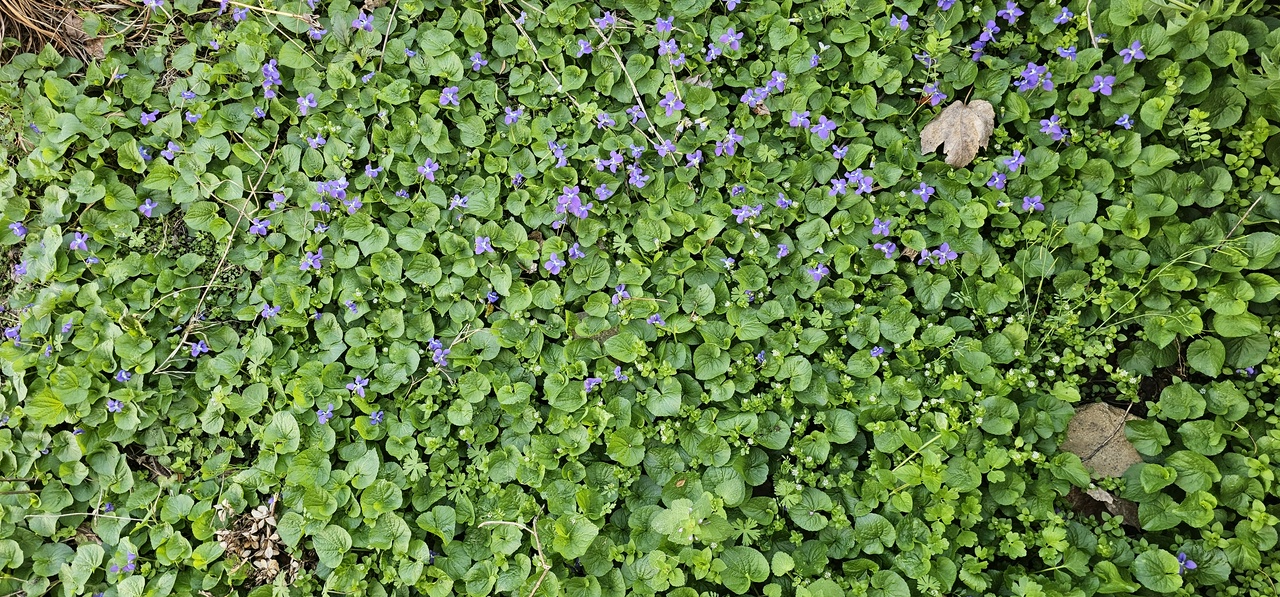
In my garden, this area of wild violets has created a thick carpet of green leaves. It did not take long for a couple of plants to spread. Not only is this native wildflower food for early pollinators, it also creates a groundcover that is hard for weeds to penetrate. I do not disturb the soil as much, leaving the soil community can thrive. It’s cool under the leaves. I often find frogs hiding out there in the hot afternoons.


Resources

🪲 Soil Life

This guide from the Xerces Society builds your knowledge about soil invertebrates. You can actually see soil invertebrates, unlike bacteria, so they can help you gauge the health of your habitat soil communities.

🪱 Soil Health

This guide from the USDA's Natural Resource Conservation Service has even more tips to create healthier soil.

🐦 For a Wildlife-Friendly Garden, Test Soil First

If you are starting your habitat garden from scratch, you have an opportunity to get information about your soil that will simplify your planning and reduce future problems.

🦋 For Pollinators' Sakes, Don’t Spring into Garden Cleanup Too Soon!

More detail on do's and don'ts for spring garden activities in a habitat garden. It’s especially good with helping you determine when it’s OK to

🐛 Habitat Planning for Beneficial Insects

Download this PDF for a more comprehensive guide to developing a better habitat.


#HabitatGardening #BiodiversityGardening #Gardening #NativePlants #Nature #Environment #Conservation #Biodiversity #Invertebrates #SolarPunk #SolarPunkSunday #Thrutopia

I’m Joe Wynne, a gardener since 1965 when I started as a helper for my grandmother. We maintained irises then and I still have those plants today. I’m a former Tennessee State Park Naturalist, who now focuses on making my garden a habitat for native plants and native bees, birds and butterflies. It’s working! I share what I learn.

Follow me on Mastodon. See articles from others in my magazine on Flipboard: Habitat Gardening

© Joe Wynne 2025-2026
This time: Make nesting easier for your birds; Improve your home habitat for birds.


If you are a garden hero, creating habitat to support populations of native birds, you not only get to enjoy the good feeling that comes from supporting nature, but you get to enjoy more bird song in spring.

Remember that many people and businesses clear out leaves and debris in the fall. This robs birds of nesting material! You can help fill the gap by making available prime resources and even help birds with nests away from your location. More nests mean more chicks.

To fill the gap, put out a variety of materials that most birds can use to build nests.

Break up twigs. Bird populations will need plenty of small twigs to make their nests. Make them available! Break up longer twigs until they are shorter than about 6 inches/15 cm. Create two or three small piles in different locations convenient to birds.

Set out long slender plant leaves. Some birds use old leaves for nests, especially if they are the slender kind. I have long leaves of irises and daylilies that I keep over the winter and then cut into smaller sections. I’ve seen these in nests in trees in my yard.

Make short strands of string and yarn available. While you're at it, cut sections of natural fibers to less than 6 inches for additional building materials. If you have fabric laying around, that can be cut into small pieces and be useful as well.

Leave moss where it grows. Some birds use moss to fashion their nests.

Leave spider webs alone. Your first reaction might be to knock down any spider web you see. Especially during the nest-building season, leave as many spider webs up as you can. Hummingbirds can use spider webs to pad their nests.

Make mud available. There are birds that use mud to add strength to their nests. If you don't know of a source of mud nearby, clear off an appropriate spot if you have one.

Don’t delay too long. When birds are ready to nest, they need the materials right then. I once left my garage door open most of the day in the spring while I was gardening. By the time I returned, a couple of Carolina Wrens had a nest 2/3 complete in the garage using a pile of twigs I had placed nearby.

Find more ideas in the Resources section below.

By the way, keep helping birds thrive through late winter. It is important to maintain their food. Birds need extra energy to survive the last of cold weather and the new activity of building nests. If feeding stops, they might find it difficult to survive.

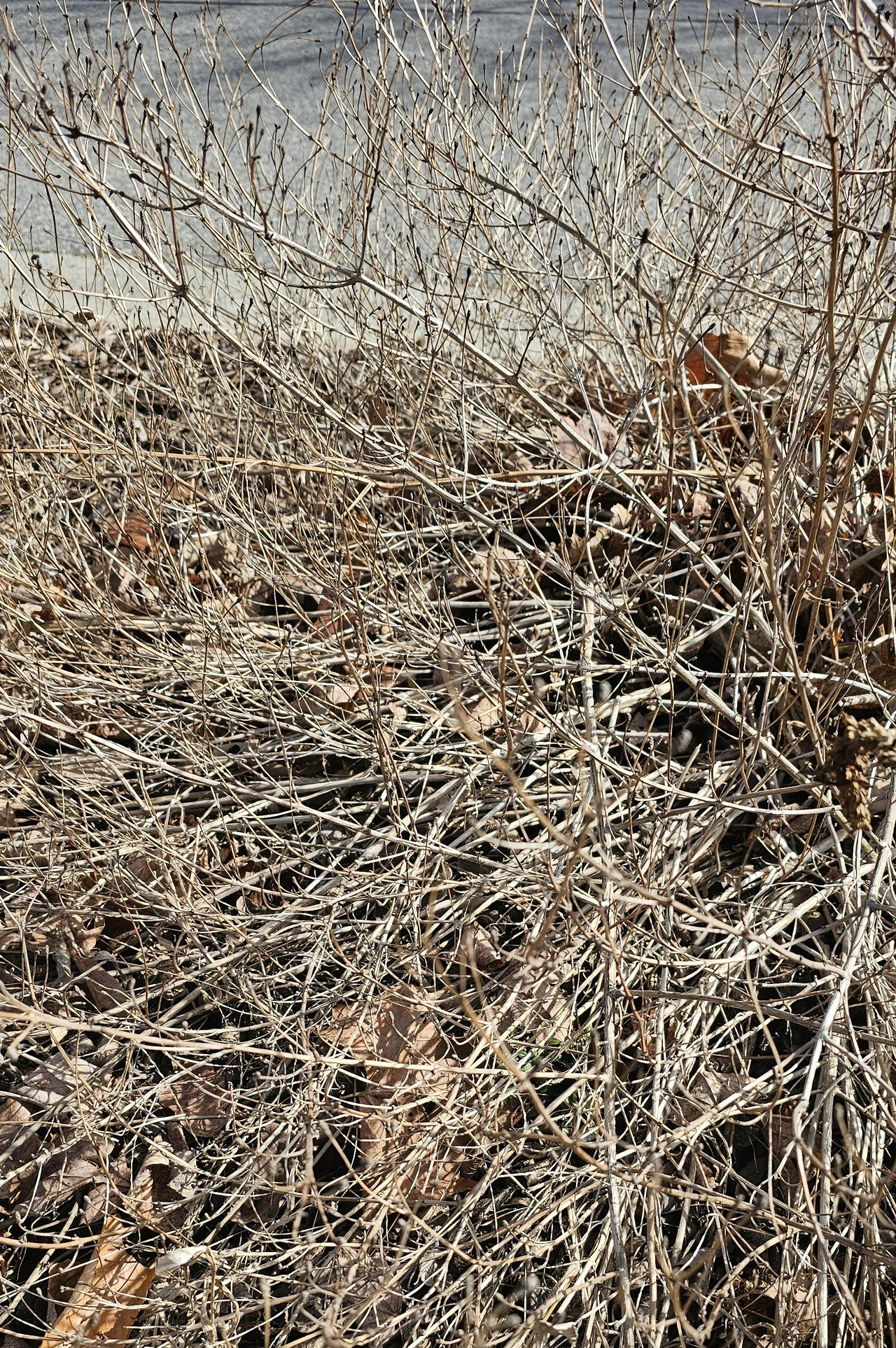
The lantana here has died back for the winter with only its slender branches remaining. My neighbors would typically cut back something like this and clear all the debris away. I cut all the twigs and broke them up into smaller nest-building size sections. It only took a few minutes. Notice that I left the leaves on the ground to house bugs for the birds to eat.

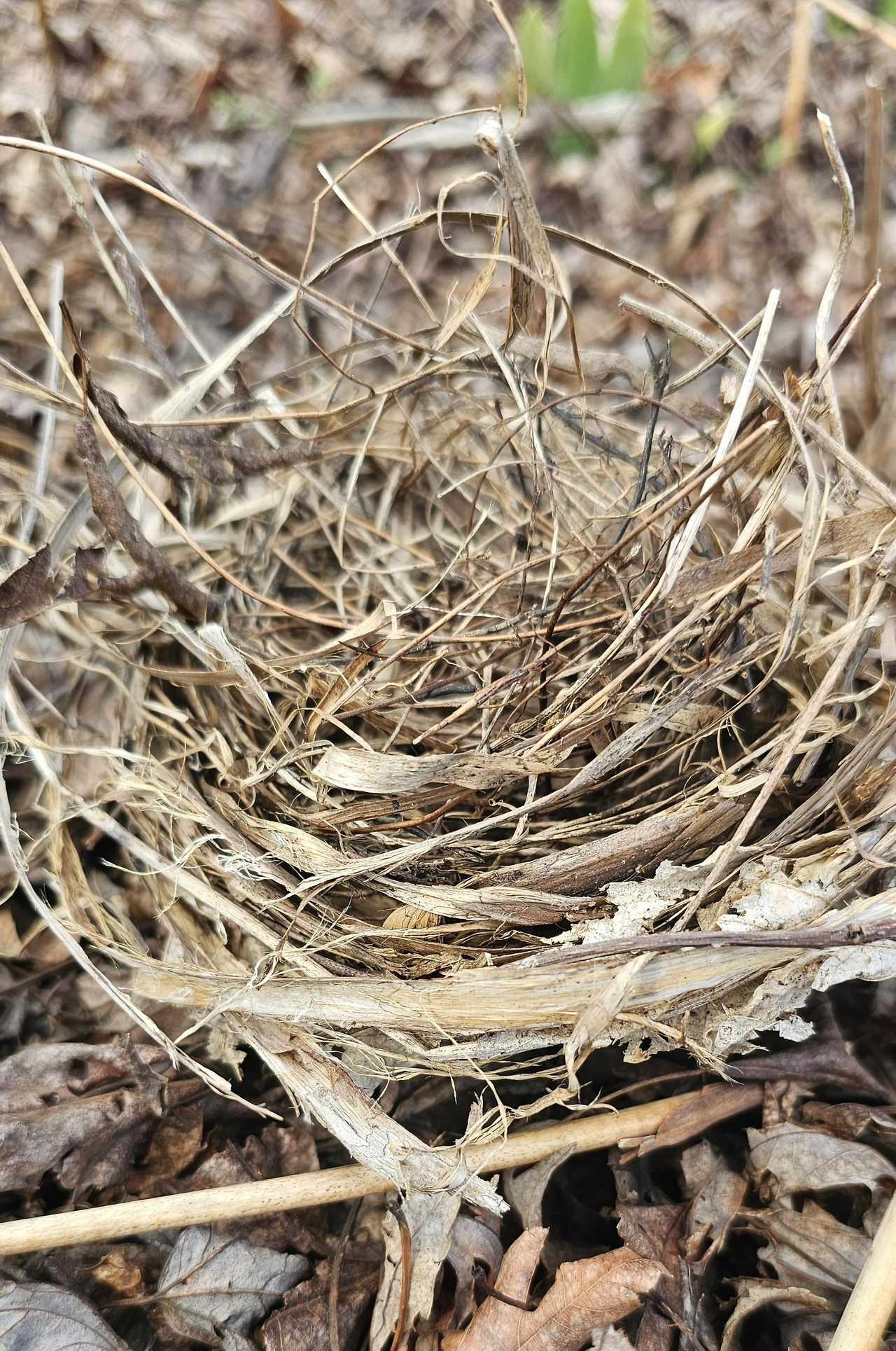
This top part of a nest that fell to the ground in my yard shows the variety of types of materials used. Visible are twigs, pine needles, dead slender leaves (daylilies from my yard), small tree leaves. These are exactly the kinds of debris people remove for the sake of “fall clean up” or “garden tidying”. What’s a bird to do without your help?


Seasonal Continuous Improvement: Winter/Offseason

As you continue designing your habitat garden, consider ways you can make additional improvements for birds.

What do your local birds use to build nests? During the winter, you can examine last year's nests to see what your local birds prefer for nesting materials.

Are you using pesticides where birds feed? Most birds feed primarily on bugs. If you kill bugs, then the birds don't have enough food. When birds spend a summer eating bugs with poisons in their bodies, it sickens or kills them. If possible, plan to dispose of these chemicals and replace them with more sustainable practices.

Do you have good location for a brush pile? Put larger branches on bottom and smaller at the top. Birds will feed and nest here.

Find more ideas in the Resources section below.


Resources

🐦 Create a Bird-Friendly Habitat

  • This guide includes eleven ways to create a bird habitat.

🐦 How to Provide Nesting Materials for Birds

  • Tips include good ways to contain materials, like yarn and string.

🐦 16 Ways to Help Birds Survive Harsh Winters

  • More information on the types of food that is most helpful in keeping birds alive, including the importance of suet and making “the bluebird banquet”.

[18 Feb 2026]


#HabitatGardening #BiodiversityGardening #Gardening #NativePlants #Nature #Environment #Conservation #Biodiversity #Invertebrates #SolarPunk #SolarPunkSunday #Thrutopia

I’m Joe Wynne, a gardener since 1965 when I started as a helper for my grandmother. We maintained irises then and I still have those plants today. I’m a former Tennessee State Park Naturalist, who now focuses on making my garden a habitat for native plants and native bees, birds and butterflies. I share what I learn.

Follow me on Mastodon. See articles from others in my magazine on Flipboard: Habitat Gardening

© Joe Wynne 2025-2026
This Time: Making sure you know germination requirements of any native plants you plan to buy; Avoiding the danger in bee houses.


There is nothing like the excitement of purchasing seeds of native plants that will bring more birds and butterflies to your space. It will be a more rewarding process if you take care to avoid potential problems.

At this point in the process, you have completed finding a source for the native plants on your “Hot List”, following steps in the previous post. You should be getting excited about the possibility of bringing more birds and pollinators to your garden.

Before you buy, though, consider making one final check.

It is wise to review your chosen plants' germination requirements before making your final purchase. Why? Especially if you're new to gardening or to growing from seed, you need to know if any of your chosen plants have requirements that you will not have the time or energy to follow. Not every seed can be simply dropped into a prepared flower bed.

To make things a little more clear, here are some examples of germination requirements.

Germination Requirement Examples

Easy: Prep Ground and Plant

Most seeds that you are used to (if you are a new gardener) require you to simply prepare the soil, sprinkle on the seeds, and cover. Many native plants have the same requirements.

Somewhat Complex: Minor Prep Prior to Planting Seed

Examples of this type are a one-time hot water treatment or “scarification” (scratching the seed coats with something like sandpaper). Some require you to plant the seeds in the fall, meaning you will have to wait before planting if you are buying seeds in the winter.

More Complicated: Significant Steps Needed Prior to Planting

Some native plant seeds take some commitment to get going. For example, they may require you to simulate a winter prior to planting. You put seeds in your refrigerator for months after wrapping them up in moist paper.

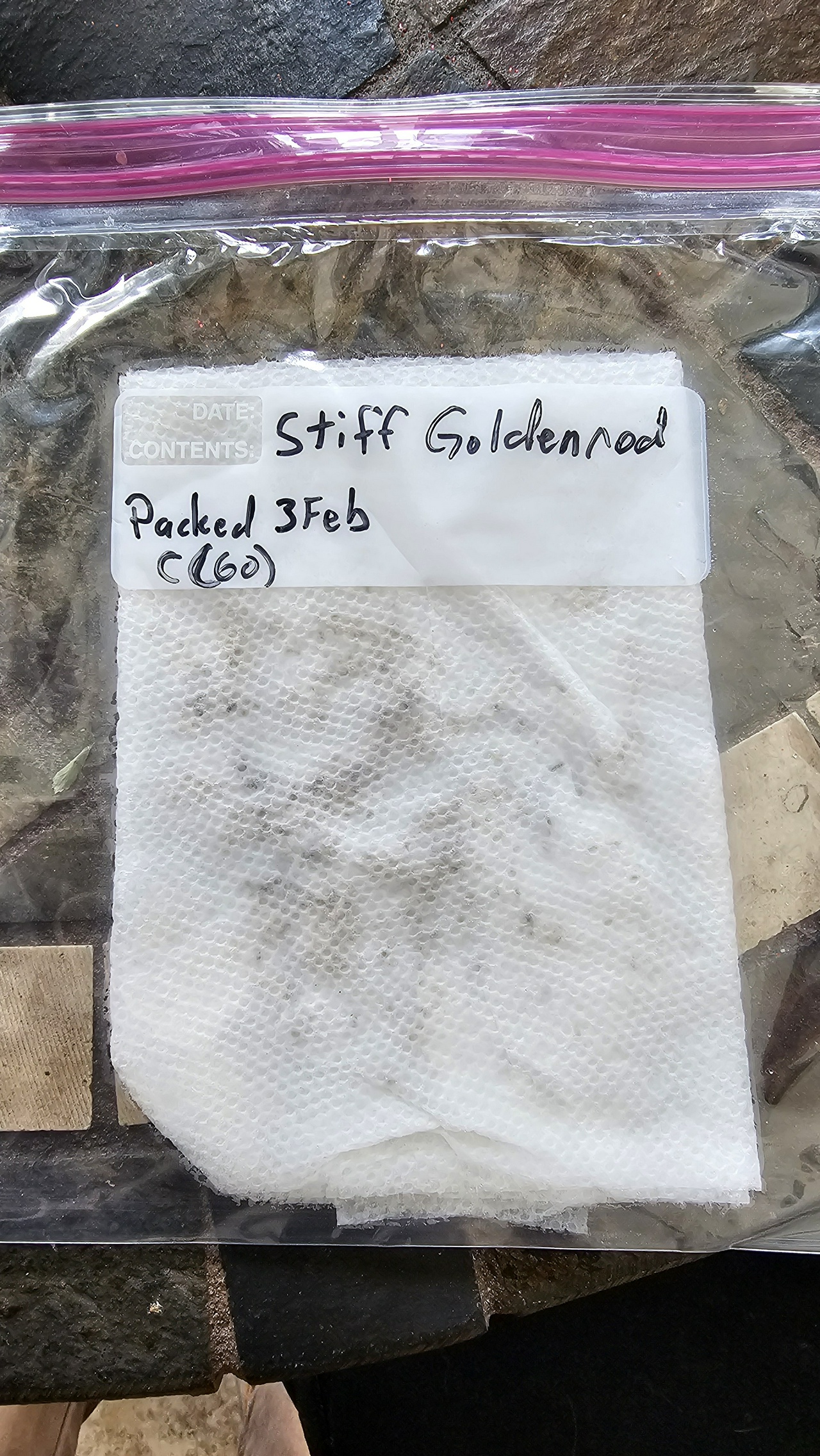
The most involved I've ever had to deal with is wrapping seeds in a wet paper towel and keeping them in a plastic ziplock bag in the fridge for 60 days. I used a calendar reminder to make sure I took out the seeds and planted them at the right time. Otherwise, they would have stayed under my pack of tortillas and been forgotten.

These steps were not too difficult for me to handle, just new to me. You have to make your own decision on what is too much for you.

No matter what the instructions are for preparing seeds prior to planting, your seed provider should give you all the details you need.

An example of instructions from Prairie Moon on germination types, including “cold stratification”, appears in the Resources section below.

If you are prepared for any germination requirement and are ready to purchase the seeds on your Hot List, then order or purchase during the winter or offseason. The earlier the better so that you can have seeds and seedlings ready for planting season!

This is an example of my “cold stratification”. It shows a clear zip lock plastic bag with the handwritten label “Stiff Goldenrod, Packed 3 Feb C(60)”. Inside is a paper towel that is moist so that you can see dark spots underneath that are seeds.


Seasonal Continuous Improvement: Winter/Offseason

🐝The common assumption has been that, to support native bees that live above ground, all you have to do is buy one of those bee or bug houses with the bamboo tubes.

The problem with these houses, at least for bees, is that diseases and mite infestations can occur unless you regularly replace the tubes. I did not want to buy a new bee house every year, and that caused me to look for other options. I found that you can buy the tubes separately, and in quantity, for less than the price of a bee house. They come in many forms: bamboo, cardboard, reeds and more. This made it easier for me to change out used tubes inexpensively, just as insect scientists recommend.

Speaking of insect scientists, more information from the Xerces Society about creating and maintaining nests for native bees appears in the Resources section below.


Resources

🌺Prairie Moon Nursery: How to Germinate Native Seeds

  • This is an example of the different categories of seed preparation steps. There are a lot more than you would guess. Still, if you only purchase a few packs of seeds, there should not be anything more complicated than you can handle.
  • Check the guidance for those plants you potentially will purchase to see if you are comfortable with the germination steps.
  • This guide also lets you look up a list of native plants that require each germination requirement. This could be a useful reference if you need to look this type of list quickly.

🐝 Nests for Native Bees Fact Sheet (pdf)

  • Explains details you need to know to be successful at supporting cavity-nesting native bees which are about 30% of all native bees in North America.

🐝 Tunnel Nests for Native Bees (pdf)

  • Plenty of information on what kind of tubes to get and how to make sure they are clean for native bees.
  • Also includes how you can support native bees without buying any tubes.

🐝 5 Ways to Increase Nesting Habitat for Native Bees | Xerces Society

  • A variety of ways to help native bees in North America.

[28 Jan 2026]


#HabitatGardening #BiodiversityGardening #Gardening #NativePlants #Nature #Environment #Conservation #Biodiversity #Invertebrates #SolarPunk #SolarPunkSunday #Thrutopia

I’m Joe Wynne, a gardener since 1965 when I started as a helper for my grandmother. We maintained irises then and I still have those plants today. I’m a former Tennessee State Park Naturalist, who now focuses on making my garden a habitat for native plants and native bees, birds and butterflies. I share what I learn.

Follow me on Mastodon. See articles from others in my magazine on Flipboard: Habitat Gardening

© Joe Wynne 2025-2026
This time:  Where to purchase Native Plants; How to support ground-nesting native bees.


It is possible for you to create a habitat relatively quickly in your garden that supports dozens of beneficial insects and active birds. This habitat will surround you with varied colorful butterflies creating a calming space.

To get there, you use the short list of keystone native plants that you created here to use to purchase locally or order online. Let's refer to your short list of plants as your “Hot List”.

Sources of Native Plants

🏬 Convenient Retailer

Sometimes retailers like big box home stores (with gardening areas) and local nurseries have available native plants. In fact, this is becoming more common. Once you have your list [link], check live plants and seed areas in these stores to see if you get lucky. (By that I mean find the plants you are looking for.) I got lucky finding Coreopsis and Rudbeckia (Black-eyed Susans).

Caveat: These stores may sell you plants that were grown with pesticides that could kill or sicken the very creatures you want to support. Do some research, look for warning labels, and ask questions.

🌻Botanical Garden Sales

Botanical gardens, arboretum, or specialized nursery sales are also a source of natives, usually sold as live plants in pots. It is common that they have sales once or twice a year as fundraisers. Take advantage of these.

Near me, for example, are a university botanical garden which has two sales a year and a non-profit private garden that has a big sale once a year.

🌱 Standard Seed Catalogues

You should be familiar with the major players in the plant and seed catalogue services. They specialize in popular garden plants and new varieties that will “wow” gardeners and tempt them to buy. They increasingly have native plants available and mark them because of their growing popularity. Sometimes, they even have “mixes” of seeds for use in larger areas.

Caveat: Mixes of seeds are compelling but may not contain your Hot List plants. In addition, they may have non-native plants which in general could go against your plan to build a viable habitat with the best plants. There is an online location for better seed mixes in the Resources section below.

🌟 Specialized Seed and Plant Catalogues

There are seed companies that specialize in native plants! And many send these to you with detailed information on how to succeed in growing them. You may not have ever heard of these organizations, but if you are building a garden habitat, you definitely need to know them.

They are my main source of seeds for the critical Keystone Plants. Search for those online serving your area. It is also good to check in with people locally in garden clubs, master gardeners and others with experience using the services.

🏡 Local Garden Societies

Some areas have a gardening group that has flower sales, sometimes they have native plants.

Knowing all the above now, you can find the best source for the live plants and seeds from your Hot List. To make things easier, there is a link below (in the Resources) section to a database of native plant, seeds and services.

Can't find a source for your desired plant? If you cannot find a source for one of the plants on your Hot List after checking everywhere you know, don’t panic. Go back to the general list of Keystone Plants you used before and choose the next one down on the list. Then see if you can find that one to purchase.


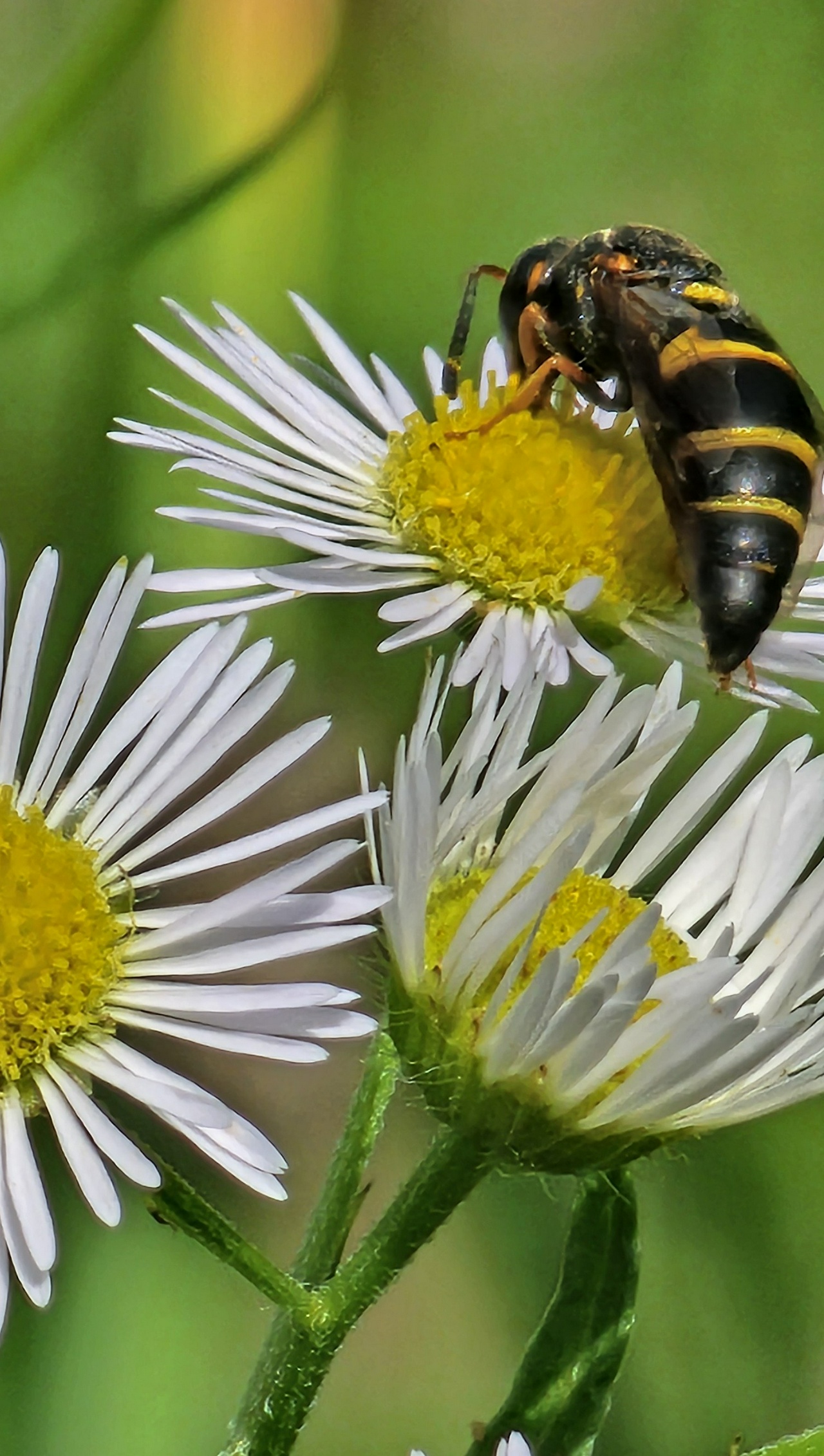
A scene from my habitat garden: A native bee with a few thin yellow horizontal stripes and other yellow markings on a long black body (which is not fuzzy) looks for pollen on a flower with a yellow center mound surrounded by dozens of slender white petals. The flowers are Daisy Fleabane, a native in the U.S. typically treated as a weed by lawn lords. The bee may be a Yellow-faced Bee.

Seasonal Continuous Improvement: Winter/Offseason

One of the two main categories of native bees live in places that are very rare in the urban or suburban environment. These are called “ground-nesting bees”. These bees are solitary and do not bother people – and you can help build their populations.

See if you have space to support ground-dwelling native bees. First, you need some ground! If you have that, you can move to the next step, making sure it's available to bees with the few resources they'll need.

Here are some preferences for bees to move in:

  • Your ground should be free of debris that will prevent bees from accessing the soil. Barriers to soil entry are wood mulch, thick layer of rocks/stones, dense vegetation mat and so on. Bare ground, clumping plants, and leaf mulch are better.
  • The ground should not be disturbed by digging, walking, hoeing, tilling, or cultivating. It should be well-drained. This is the easiest maintenance you will ever have in your habitat!
  • You will need to add sand and pebbles if they are not already available in that area.

Resources

🌺Native Plant, Seed and Services Directory

If you choose to search for native perennial seeds online and don't know where to start, access this database and filter to find a provider that has natives for your eco zone.

🌱Prairie Moon Nursery

This is an example of a plant and seed catalogue that specializes in native plants. They have mixes that have been developed in collaboration with the Xerces Society for Invertebrate Conservation.

🦋Pollinator Conservation Seed Mixes

If you have a large space, try a pre-mixed pack of various natives designed for your ecozone. Not all areas are represented but you might find a quick solution to your needs.

🐝Clear Space for Bees: Why Pollinators in Your Yard Need Access to Bare Ground

Building ground-dwelling bee habitat is new for most of us, but it is not hard once you understand the important basics. This guide from the Xerces Society will explain what you need to know.

[12 Jan 2026]


#HabitatGardening #BiodiversityGardening #Gardening #NativePlants #Nature #Environment #Conservation #Biodiversity #Invertebrates #Pollinators #BirdConservation

I’m Joe Wynne, a gardener since 1965 when I started as a helper for my grandmother. We maintained irises then and I still have those plants today. I’m a former Tennessee State Park Naturalist, who now focuses on making my garden a habitat for native plants and native bees, birds and butterflies. It’s working! I share what I learn.

Follow me on Mastodon. See articles from others in my magazine on Flipboard: Habitat Gardening

© Joe Wynne 2025-2026
This time: Select your native plants ahead of the next planting season; Importance of rock walls [Dec 31, 2025]


Imagine how it will feel being surrounded by a variety of birds calling in the spring and butterflies fluttering around all summer. All you have to do is plant the right natives in enough numbers to support those populations.

After reading the last post, you know how to use the native plant list reference (below) to find potential plants that will work in your garden or yard. Your next step is to come up with a short list of plants that you will order over the winter so that you will have them ready in the spring. We'll focus on native perennials for now. This step for perennials takes some planning, especially if you are new to gardening and growing plants from seeds.

The planning builds excitement, though. Based on my experience, these steps will reduce disappointment.

🌱 Determine how many types of plants you will plant in significant numbers.

Remember, the native perennials you will plant will support dozens of species. Beneficial insects can't all feed on one plant. They need a group, a “mass planting.” Consider planting at least four or five, but hopefully many more plants.

I say this from experience. I have over-purchased and then not been able to have everything ready for spring planting leaving me with unopened packages of seeds that I'm not sure are going to be viable when I get to them. If you are new to this, and not sure about your time commitment, start slowly. Limit selections to two or three native perennials appropriate for your area and use those for the next steps. You will plant a bunch of whatever you choose, remember.

🌞 Characterize the area(s) where you will plant.

Use three criteria:

  • Amount of sun
  • Amount of rain/soil moisture
  • Soil type

Make a note of the characteristics of each separate area where you will plant. For example, you might have one spot that is sunny (gets at least 8 hours of sun) and dry with average soil. Another spot may be in the shade mostly and be a low, wet area with clay soil.

🌺 Select plants from your ecoregion list.

Go back to your ecoregion list of native perennials and use your characteristics to select plants you will attempt to purchase to plant in the next planting season.

  • You will generally want to select plants starting at the top of the perennials list. Start at the first one. Copy its Genus name (second column) or specific example (third column) from the page.
  • Paste the name in your browser and search for its preferred characteristics. Does it match one of your target planting spots? Great! You have a winner! Does it prefer an amount of sun and a type of soil that you cannot provide? OK, then, pass it by and go to the next perennial in the list.

Ask the same questions about habitat characteristics for the next one and keep going until you have a candidate for each area where you will plant. Choose more if you have more capacity to plant and maintain during the growing season.

I had sunflowers that needed sun and also asters that I wanted for the Fall, but asters needed some shade. Knowing this helped me choose a couple of plants for sun and a couple options for shade which I did have under some trees in a section of my yard.

This section from the ecoregion list I used shows four groups of plants, names of examples, and the number of native butterflies and pollen specialist bees that they support. The top two support at least 100 butterflies and 33 or more bees. Now you can see that you need more than a couple of plants if you have room for them. I chose a short list of plants that I took to see if I could obtain them.  The black-eyed susans were no problem because they are easily available in retailers near me. The others…well, that's a story for the next post.

Once you complete this selection process, congratulate yourself! You have a short list of the best native perennials to boost your garden habitat, an important step. Now you are ready to find outlets to purchase those seeds or plants. I'll cover that in the next post.


Seasonal Continuous Improvement: Winter/Offseason

Consider building a rock wall or feature in your garden to improve the habitat. Rock walls are foundational to the habitat that you are building in your garden. Rock walls provide vertical structures that birds, beneficial insects and small animals can use for shelter and nesting. In particular, they provide overwintering sites, known to be critical to building populations of beneficial insects.

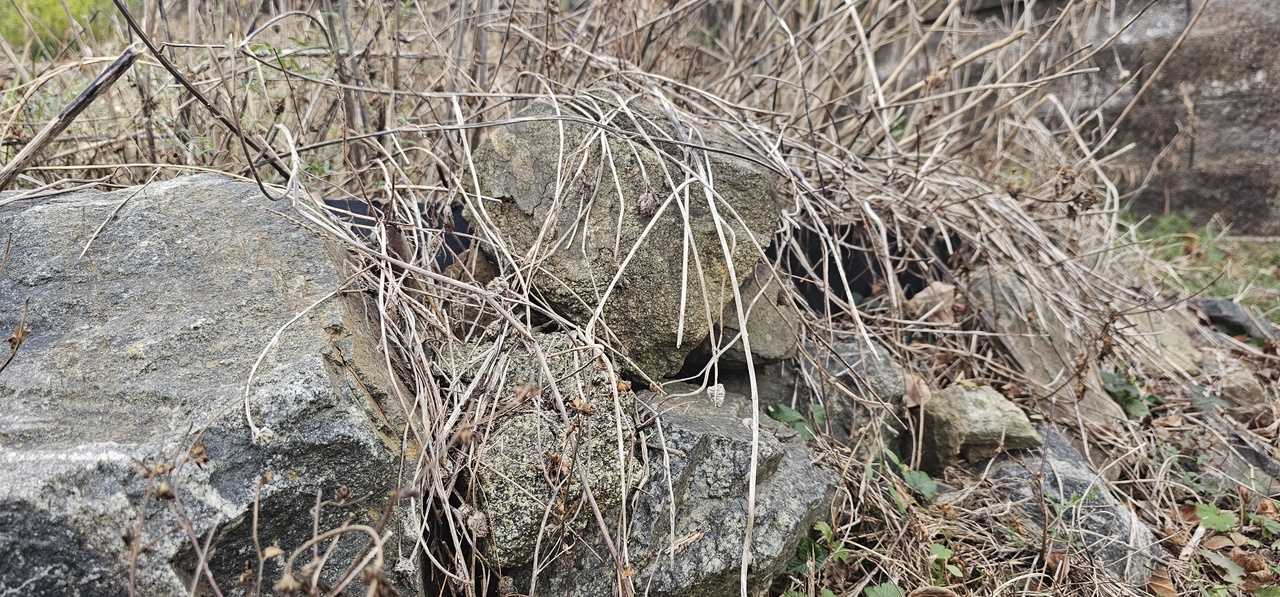
One of the rock walls in my garden taken December 31. It is made up of found rocks stacked vertically against a black barrier, visible in a couple of spots because rocks fell from the wall earlier during the active growing season. It defines a terrace on a sloped area of ground. Dead strands of annual vines can be seen over the rocks, after providing shade during the hot summer. Dead stems of native plants can be seen on the “high” side of the terrace.

This part of garden design can get your creative juices flowing! You can make a terrace, surround a pond, or just stack rocks to enhance an uninteresting area. The guide below, “Wildlife on the Rocks,” will help you with a habitat-centric design.


Keystone Plants by Ecoregion (National Wildlife Federation)

  • Lists of “critical plant genera and example species that host significant numbers of butterflies, moths, and pollen specialist bees.”
  • You simply select your U.S. and Canada ecoregion to display a list of the best trees, shrubs, and flowering perennials to use in your habitat garden. Easy!
  • Covers North America only.

Wildlife on the Rocks: Providing the Rocky Habitats Bugs Need for Shelter | Xerces Society

  • This guide has plenty of options and tips for adding or enhancing rock features in your garden to add additional critical support for populations of insects.

#HabitatGardening #BiodiversityGardening #Gardening #NativePlants #Nature #Environment #Conservation #Biodiversity #Invertebrates #Pollinators #BirdConservation

I’m Joe Wynne, a gardener since 1965 when I started as a helper for my grandmother. We maintained irises then and I still have those plants today. I’m a former Tennessee State Park Naturalist, who now focuses on making my garden a habitat for native plants and native bees, birds and butterflies. It’s working! I share what I learn.

Follow me on Mastodon. See articles from others in my magazine on Flipboard: Habitat Gardening

© Joe Wynne 2025-2026
This Time: The “key” rule for selecting the best native plants; How to “leave the leaves” without angering neighbors.


You want to add native plants to your garden, but which ones are best? Which ones have the most benefits for the native bees, birds, and butterflies in your garden habitat?

The retailers near you are probably not experts in habitat gardening. They might have some natives, and that is a good trend, but you actually need guidance on what plants are most needed in your geographic area.

It turns out that certain plants have been found to be much more supportive of beneficial insects and wildlife than others. In fact, some plants support hundreds of species rather than just a few. These are called Keystone Plants, and include trees, shrubs and flowering perennials. These are the best for you to add to your native garden design.

You can find the keystone plants best for your garden in the National Wildlife Federation's guide “Keystone Plants by Ecoregion.” (See link below). I used this resource to identify four plants that I would work with initially, growing from seed to planting in beds designed for native plants.

In future posts, I will go through examples, describe my experiences, and explain the steps to follow, but for now, I want to introduce the Keystone Plants resource linked below.

I was surprised to see that the best flowering perennial for my area (a type of goldenrod) supported 104 caterpillar species and 42 native bees species – and I was cutting it down in my garden to clear way for native plant beds!


Seasonal Continuous Improvement: Early Autumn

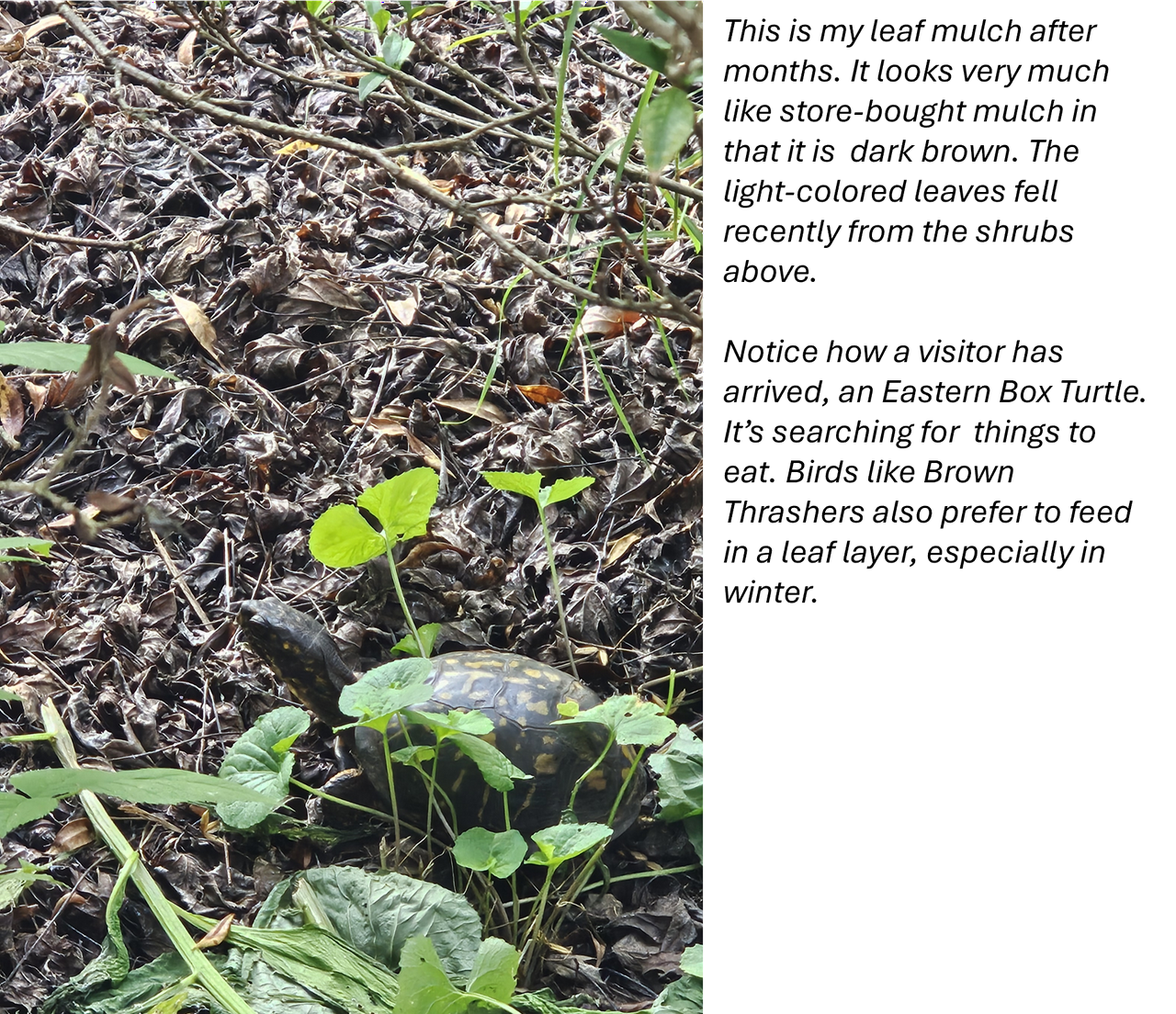
You might have seen headlines recently related to “Leave the Leaves.“   Yes, it is important to use leaves as mulch wherever you can. Butterflies and moths overwinter in leaf mulch. Birds look for food in leaf mulch, especially helpful in winter. Turtles and other wildlife also need a leaf layer.

Bag mulch is not as environmentally sound, and the long-lasting dyed mulch creates a solid crust that no animal can break through.

But the suburban lawn aesthetic rarely allows you to take advantage of fallen leaves as mulch! You might have neighbors who will disapprove of your use of leaves. (“Why are you leaving your leaves? Don’t you have a leaf blower?”) I have an HOA that expects standard mulch and will complain if I have leaves in flower beds near the street.

If this sounds like your situation, I have developed some tricks to avoid controversy and still help butterflies, birds, and native bees.

  1. Move leaves away from easy visibility near the street. If necessary, take them all the way to another side of the house. I have garden beds and shrubs away from the street to where I move leaves from trees near the street.

  2. Pile leaves in a thick layer because they will eventually reduce to a much smaller volume.

  3. When dry, crush leaves with your feet (by walking on them) or by hitting them with the back of a rake to create some smaller pieces in with larger pieces. The whole layer will stay put in strong breezes.

  4. Wait for leaves to turn brown. It only takes a matter of days and then the layer looks like standard brown mulch.

  5. If you still fear controversy, put some standard mulch loosely over leaves to fool neighborhood “inspectors.”

Don't let nosy neighbors keep you from creating your habitat garden. They will thank you later when more birds sing in the Spring and many butterflies start to flutter regularly in the Summer.

References

Keystone Plants by Ecoregion (National Wildlife Federation)

  • Lists of “critical plant genera and local species that host significant numbers of butterflies, moths, and pollen specialist bees.”
  • You simply select your U.S. and Canada ecoregion to display a list of the best trees, shrubs, and flowering perennials to use in your habitat garden. Easy!

Fact Sheet: Nesting & Overwintering Habitat For Pollinators & Other Beneficial Insects

  • In this guide from the Xerces Society, there is a “Leave the Leaves” section starting on page 4 with actions for you to take.

#HabitatGardening #BiodiversityGardening #Gardening #NativePlants #Nature #Environment #Conservation #Biodiversity #Invertebrates #Pollinators #BirdConservation

I’m Joe Wynne, a gardener since 1965 when I started as a helper for my grandmother. We maintained irises then and I still have those plants today. I’m a former Tennessee State Park Naturalist, who now focuses on making my garden a habitat for native plants and native bees, birds and butterflies. It’s working! I share what I learn.

Follow me on Mastodon. See articles from others in my magazine on Flipboard: Habitat Gardening

© Joe Wynne 2025-2026

This time:

  • Design tips for starting a habitat garden
  • How to maintain winter housing for beneficial insects in late summer / early fall
  • free detailed fact sheet from the Xerces Society!

I have been helping my mother move out of her house. Her large garden has roses, hydrangeas and peonies. But what has really thrown me is the amount of chemicals that have been stored in several locations. Pesticides and fungicides, in powder and liquid form, concentrates and ready-to-use. Some are very old and the containers are leaking. They will all require special disposal according to the rules in her city because they are poisons.

This is not uncommon with traditional gardeners who have been at it for decades. These chemicals have been an integral part of the process. They have been necessary to meet the goals of the traditional garden, which unfortunately has little connection to helping the environment. Rather the goal is to design to a particular aesthetic.

As beautiful as the outcomes of this style of gardening are, they inevitably create killing fields for birds, butterflies, native bees and other beneficial insects. These traditional gardens are part of the reason why populations of birds and butterflies have been decreasing drastically.

But now it is time to put away these poisons in favor of a gardening style that creates a home for the nature that improves our mental and physical health. It's time to design gardens with more native plants that thrive naturally and do not need additional chemicals to survive.

Design for Mass Plantings. For many of these natives, it works better for design and habitat if they appear in mass plantings. A couple of examples:

  • A prairie-like display, where there are many species together that bloom all through the growing season. Habitat gardeners sometimes use special beds or replace a portion of their lawn with such a display.
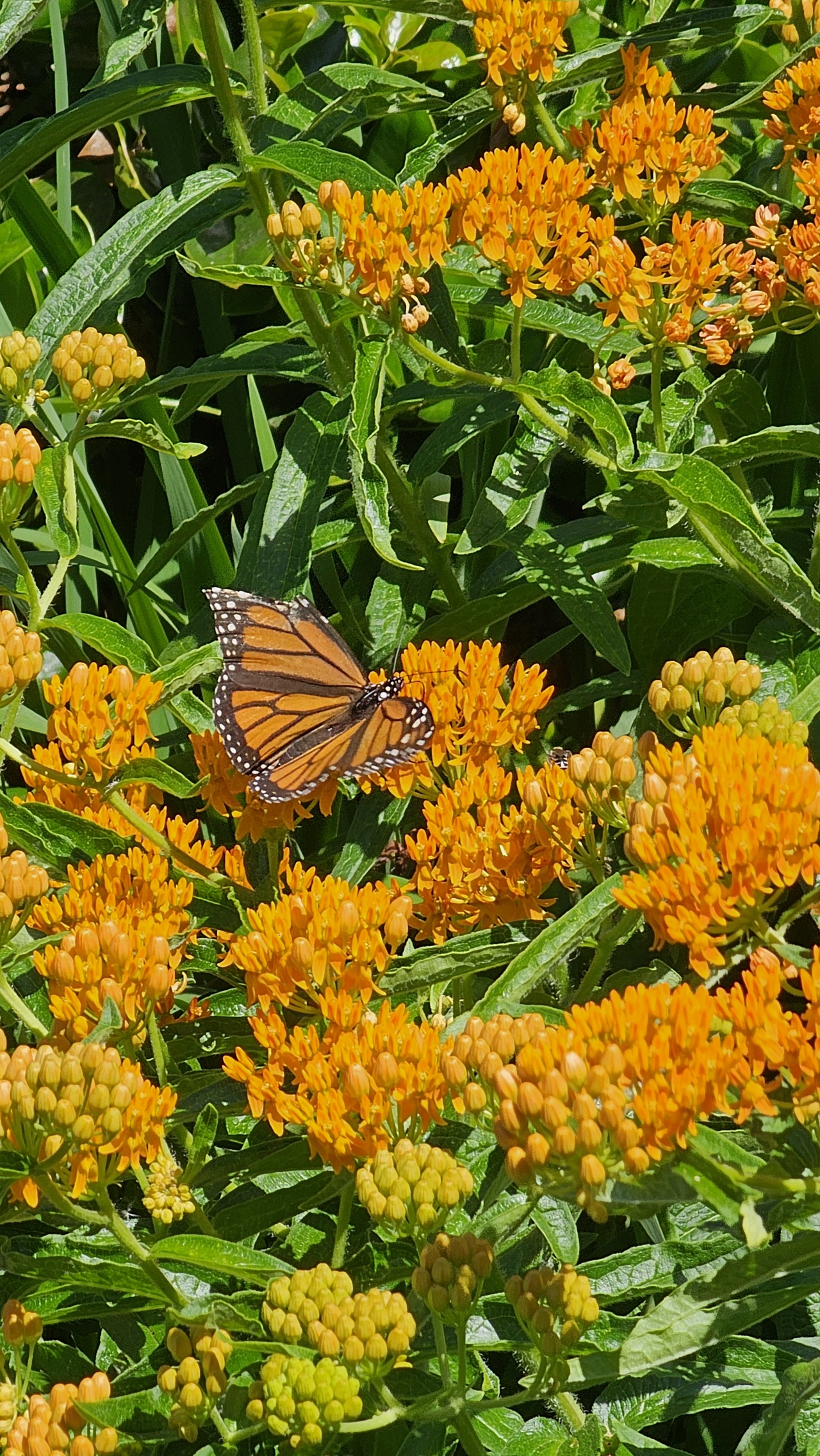
  • A garden bed filled with the same native plant, that attracts populations and serve as a food source for the larva of certain pollinators. For example, varieties of Milkweed or Butterfly Weed (Asclepias) is known as the only food source for Monarch babies.

Butterfly weed is allowed to grow freely in one of my garden beds and attracts all kinds of pollinators. Monarchs appear also to be laying eggs and successfully reproducing here. When designing, add space for native plants which are the foundation of habitat for birds, native bees, and butterflies.

Think about how you can make adjustments in your garden design to add native plants to improve habitat for birds, native bees and butterflies.

  • Do you have a garden bed that can be converted to contain native plants? It might be a bed where there is a spot where you usually place annuals. Your annuals can then be native plants. Native plants can be grown from seed or purchased as small plants just as non-natives that are usually available.
  • Do you have a space in an appropriate area in your yard that can be converted to a mini prairie-like zone? It could be an abandoned garden bed or a corner of the yard that is not used. Consider what basic preparation the area needs to contain native plants. If the garden bed was abandoned because it was too much work to maintain in the hot summer, the good news is that native plants take less maintenance because they are better suited for your area. (I notice this by having to water natives far less than other plants.)
  • Native plants include shrubs and small trees, so in your design plans feel free to think about an area that has multiple heights, perhaps small trees and shrubs in the back with shorter flowering plants in the front. Designing with native plants can be very similar to traditional design.

Start with a simple design change to see how you like the benefits, such as more birds singing and more butterflies fluttering around you. When you plant natives as a supportive habitat, you will also be able to avoid using the traditional garden poisons.

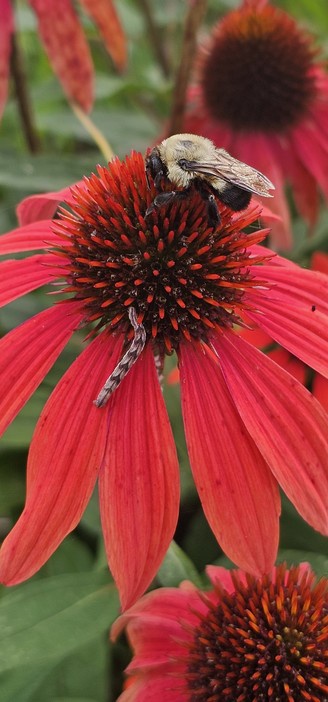
In a garden bed that contains perennials, there was a spot for annuals where I started growing native Coneflowers. These attracted many pollinators, caterpillars and, once seeds emerged, Goldfinches. When designing, select plants that support more species.

Continuous Improvement Seasonal Tips: Late Summer Early Fall

Traditional yard cleaning up is deadly for pollinators, and for bugs that birds feed on! Many invertebrates overwinter inside plant stems. When you discard the stems as part of “Fall cleanup,” you allow populations to die off in the winter. Birds need that material for spring nest building as well.

“The availability of nesting and overwintering habitat is one of the most important factors influencing populations of native bees and other beneficial insects.”

- The Xerces Society

To help populations increase in number with a supportive habitat, you will need to have a plan for dead plant stems. Of course, you do not want your yard to look like an abandoned farm. Your plan will help you find places where the dead plant material can be placed out of site, or in an appropriate spot.

I leave dead plants standing for as long as I can. Many are clipped to a different height for easy access by native bees. The ones hidden from public view in the back yard I leave for a long time. When any need to be moved, I cut low near the base and hide them under shrubs, behind trees and so on. For dead material that I remove in the summer for some reason, I can feel safe to break those up into sections for more winter hideaways.

Recommended Resource

For more on creating winter hideaways for pollinators and potential bird food, you can't do much better than this free fact sheet from the Xerces Society, the group that studies just this kind of thing.

Fact Sheet: Nesting & Overwintering Habitat For Pollinators & Other Beneficial Insects This covers how to manage your plants each season to maximize beneficial insect populations. Also includes details on providing water, using mulch safely, and creating a brush pile. Other information here will be covered in future posts.


#HabitatGardening #BiodiversityGardening #Gardening #NativePlants #Nature #Environment #Conservation #Biodiversity #Invertebrates #Pollinators #BirdConservation

I’m Joe Wynne, a gardener since 1965 when I started as a helper for my grandmother. We maintained irises then and I still have those plants today. I’m a former Tennessee State Park Naturalist, who now focuses on making my garden a habitat for native plants and native bees, birds and butterflies. It’s working! I share what I learn.

Follow me on Mastodon. See articles from others in my magazine on Flipboard: Habitat Gardening

© Joe Wynne 2025-2026
This Time: How to support the butterflies that are in your garden now; Planning to support beneficial insects and birds in the Fall


What if your garden was an important part of a conservation effort? Would you feel like a hero?

The good news is that you can get involved in such an effort without much difficulty. Butterfly conservation needs as many habitat locations as possible and gardens could be a huge source of habitats.

How do we know what the problem is? The Xerces Society, which does research in this area, recently published their report State of the Butterflies in the United States. Here are a couple of highlights:

🦋 More than one-fifth of our butterflies disappeared between 2000 and 2020.

🦋 Over 40% of assessed species fell in numbers by 50% or more—and two dozen species suffered more than 90% losses.

OK, there is a serious need for action, but what can be done? According to the report:

🦋 “Butterfly habitat should be woven into all parts of our landscapes—farmland, utility corridors, solar arrays, bike paths, roadsides, natural areas, and backyard and community gardens—to provide homes for common and wide-ranging butterflies as well as rare and at-risk species.”

🦋 “To recover butterflies, we must combine efforts across towns and cities, working lands, and natural areas as well as in the linkages and stepping stones which provide connecting pathways.”

Notice the listing of “backyard and community gardens”? That could be you!

Here's a way for you to start as part of the conservation effort right away. Use a version of the organizer below. You may also need a reference (app or printed) to help you identify any butterfly you don't know. It should also include basics about their life cycle.

The goal is to support the butterflies that are already in your area. It helps you list the butterflies you see and then build the support they need in your garden. I use an example of the Tiger Swallowtails I see in my garden. I used this to make sure they had what they needed to increase their population. Below the organizer are more details of what I did to support the swallowtail populations.


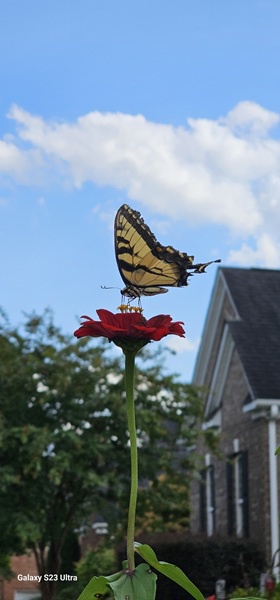
Butterfly seen: Tiger Swallowtail

Caterpillars feed on (from references): Tuliptree, cherries, plum, others

Adults prefer to feed on (from references):

  • Phlox (Phlox spp.)
  • Ironweed (Vernonia spp.)
  • Joe-Pye Weed (Eutrochium purpureum)
  • Milkweed (Asclepias spp.)

In my garden they also liked these existing flowers * Zinnias * Mexican Sunflower

Water needs: Water “puddle”. More on providing water

Other needs and preferences: Resting places


I saw a Tiger Swallowtail on a flower in my garden. That triggered my research. Once I learned what the caterpillars feed on, I looked to see if those trees were around. I did find a Tuliptree in the woods near my house. The caterpillars were taken care of on that tree, so to make sure there was a continuous population, I needed to make sure the adult butterflies had what they needed. There were precious few gardens with flowers in this area. A few minutes of research revealed a list of flowers they liked.

My next steps were to plant the flowers from that list, starting gradually. Also made sure that there was shallow water available for them to get a drink and minerals. Now, every summer, more adults will survive to mate and lay eggs in the Tuliptree. The population will be sustained and possibly grow. All because I adjusted what I planted in my garden.

You can do the same! It allows you to build on what butterflies you already have to increase the population. Oh, and you get to enjoy all the butterflies.


See below for more tips and resources.


Continuous Improvement Seasonal Tips: Late Summer Early Fall

Many birds need seeds and berries in the fall. Bees and Butterflies need late-blooming flowers, too. Check your garden for these resources. Do you need more? If yes, make a note to remedy this next season by growing plants, shrubs, and/or trees to supply this need.

  • Providing berries might seem like it would be difficult. But maybe not. In my area in the Southeastern U.S., I upgraded a native plant bed with a free young Beautyberry shrub that was growing wild nearby. I used seedlings from that one to expand to more.
  • Pollinators need flowers through late summer and fall. Typically garden flowers are fizzling out by late summer. Do you have flowers that arrive in late summer and fall? In my area, these would include asters, and Goldenrod, even Passionvines (Maypops).

Recommended Resource

Pollinator-Friendly Native Plant Lists | Xerces Society Go here to find the plants you need to support butterflies, native bees, and more (in the U.S.). This page will help you find the best plants for where you live.


#HabitatGardening #BiodiversityGardening #Gardening #NativePlants #Nature #Environment #Conservation #Biodiversity #Invertebrates #SolarPunk

I’m Joe Wynne, a gardener since 1965 when I started as a helper for my grandmother. We maintained irises then and I still have those plants today. I’m a former Tennessee State Park Naturalist, who now focuses on making my garden a habitat for native plants and native bees, birds and butterflies. It’s working! I share what I learn.

Follow me on Mastodon. See articles from others in my magazine on Flipboard: Habitat Gardening

© Joe Wynne 2025-2026